


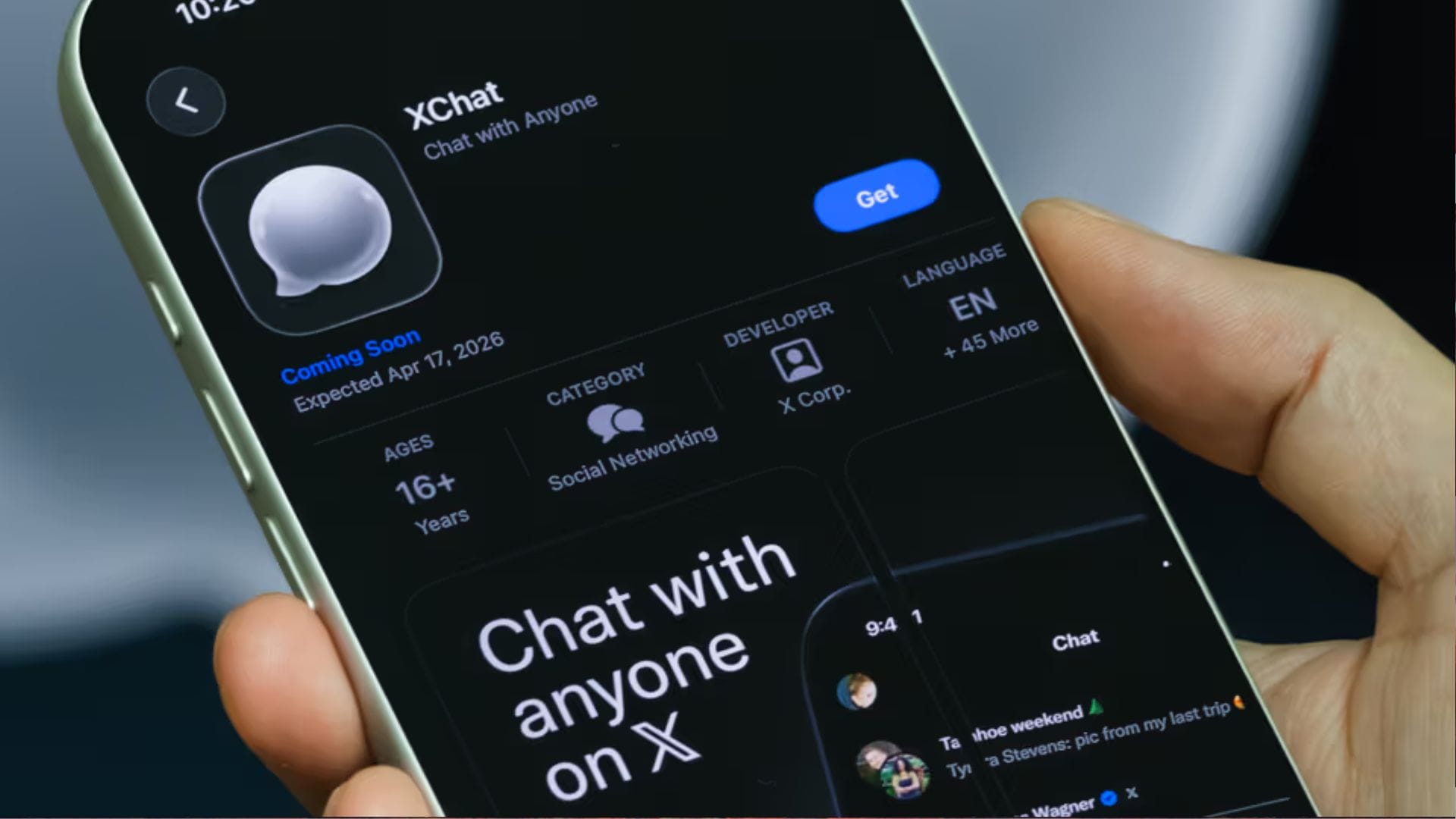
X has released XChat, a new standalone messaging application that allows users to access the platform’s chat features outside the main X app. The application is now available for download on iOS devices, marking the first major step towards separating messaging from the social media service’s primary interface.
The company first indicated in 2025 that it planned to remove direct messaging from the main X platform. While that transition has not yet fully taken place, messaging remains accessible through the original X application, its web version, and the newly launched XChat app. The move suggests a gradual shift in how the company intends to structure its services.
The launch video for XChat highlights several features that mirror tools already introduced in X’s messaging environment. These include message editing and deletion options, screenshot blocking, and the ability to send disappearing messages. The app also introduces expanded communication tools, including video and audio calling.
Chat with anyone on X.
— XChat (@chat) April 24, 2026
Completely private.
Now on your home screen.
Download for iOS: https://t.co/wBBfjJyJmu pic.twitter.com/u0QeGs1Z3D
Messaging features designed to match modern expectations
XChat has been built with features commonly found in modern messaging platforms. Users can edit messages after sending them, remove messages entirely, and use privacy-focused tools designed to limit unwanted sharing. Screenshot blocking, for example, is intended to prevent recipients from capturing conversations without permission.
Another notable feature is the use of disappearing messages, which automatically delete after a set period. This function reflects a growing trend among messaging platforms to provide greater control over how long conversations remain visible. X has also stated that all messages sent through XChat are protected with end-to-end encryption, meaning only the sender and recipient can read them.
In addition to text-based messaging, the app supports both video and audio calls. This integration puts XChat in direct competition with established messaging services that already combine chat and calling on a single platform. By offering these communication options in a separate application, X appears to be positioning messaging as a distinct service rather than a secondary feature within the main social feed.
Despite introducing a standalone app, the company has not yet confirmed when direct messaging will be fully removed from the main X platform. For now, users continue to have access to chat functions across multiple interfaces. This transitional approach suggests that the company is testing user response before making more permanent structural changes.
Group communication and the shift away from Communities
XChat is also expected to become the central location for group-based conversations that previously took place in Communities. The platform recently announced plans to discontinue Communities at the end of May, signalling a shift in how group discussions will be organised within the ecosystem.
Communities allowed users to gather around shared interests and participate in topic-based discussions. However, the introduction of large group chats in XChat appears to offer a simpler alternative that relies on messaging rather than forum-style threads. According to the company, group chats in XChat currently support up to 350 participants.
The everything app, which requires 3 apps to use the core product. pic.twitter.com/1aJF4n2par
— camol (@camolNFT) April 23, 2026
The company has indicated that this participant limit will increase over time, suggesting that XChat may eventually host even larger discussion groups. By focusing on messaging-based interactions, the platform may aim to streamline its services while maintaining social engagement features.
The retirement of Communities also reflects broader changes in the company’s direction. Rather than supporting multiple communication formats, X appears to be consolidating features into fewer tools. Group messaging in XChat may become the primary way users connect around shared topics, replacing more complex community-based structures.
This move may also simplify the user experience, especially for those who prefer conversational formats over forum-style discussion boards. However, it remains unclear how existing Communities members will transition into the new system once the feature is fully retired.
Strategic direction and the future of the X ecosystem
The release of XChat highlights an apparent shift in the long-term strategy originally outlined by X owner Elon Musk. When the company rebranded from Twitter to X, Musk described plans to transform the platform into an “everything app,” combining social networking, messaging, job listings, and financial services within a single environment.
A standalone messaging application appears to contrast with that original vision. Rather than combining features into one central platform, the company is now separating certain functions into dedicated tools. This approach may reflect the practical challenges of building an all-in-one system that satisfies a wide range of user needs.
The corporate structure surrounding X has also changed in recent years. The company now operates as a subsidiary of xAI, which itself is part of SpaceX. This arrangement indicates that artificial intelligence development has become a central priority across Musk’s businesses.
With increased focus on artificial intelligence, messaging expansion may serve as a supporting function rather than a primary objective. Earlier ambitions to create a service similar to China’s WeChat, which integrates messaging, payments, and other services into a single application, may now hold less urgency.
The introduction of XChat suggests that X is adapting its plans to reflect changing priorities and technical realities. By delivering a separate messaging platform while maintaining compatibility with existing systems, the company appears to be balancing innovation with user continuity.
While the long-term roadmap for XChat remains uncertain, its launch represents a meaningful step in the ongoing transformation of the X ecosystem. The app’s success will likely depend on how effectively it integrates with existing services and whether users embrace the idea of managing conversations outside the main social platform.