


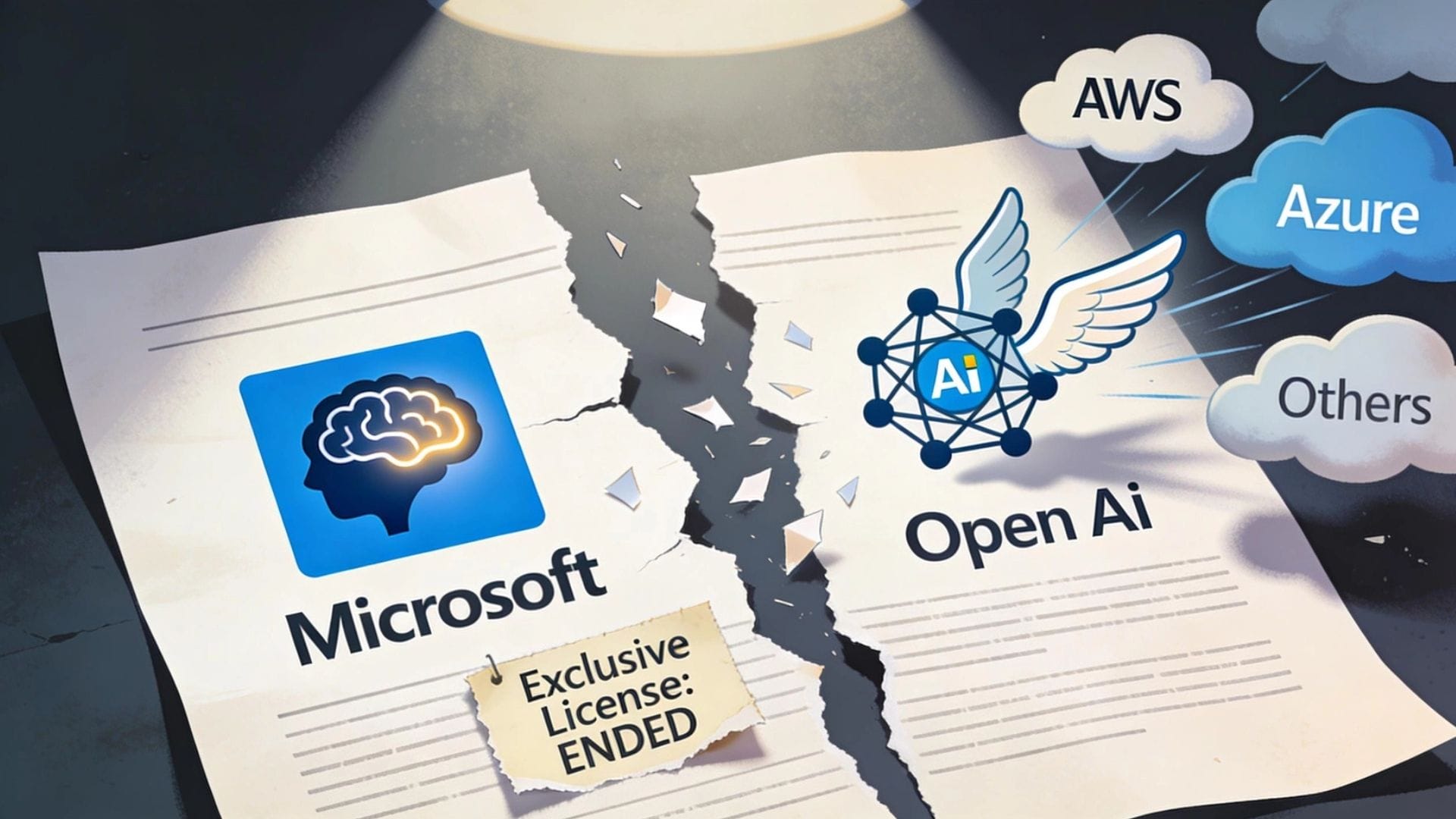
The long-standing partnership between OpenAI and Microsoft has entered a new phase following amendments to their multi-year collaboration agreement, allowing OpenAI to distribute its technology beyond Microsoft’s cloud infrastructure.
The updated terms mark a notable shift in the relationship between the two companies, which have worked closely together since announcing their initial collaboration in 2019. The changes mean OpenAI can now make its latest artificial intelligence models available to other companies through multiple cloud providers, ending Microsoft’s exclusive access to these technologies.
Both organisations confirmed the changes in a joint announcement published on their respective websites. Despite the removal of exclusivity rights, Microsoft will remain OpenAI’s primary cloud partner, meaning that new products are still expected to launch first on Microsoft’s Azure platform before becoming available elsewhere.
we have updated our partnership with microsoft.
— Sam Altman (@sama) April 27, 2026
microsoft will remain our primary cloud partner, but we are now able to make our products and services available across all clouds.
will continue to provide them with models and products until 2032, and a revenue share through…
OpenAI chief executive Sam Altman also addressed the update publicly on the social media platform X, stating that the company is “now able to make our products and services available across all clouds.”
Shift towards broader access to AI services
The latest amendments reflect OpenAI’s broader strategy to expand the reach of its artificial intelligence tools and services. By removing exclusivity clauses, the company can partner with a wider range of cloud providers, potentially increasing access to its technologies for businesses worldwide.
Industry analysts have noted that the move could significantly reshape competition in the cloud computing market. Until now, Microsoft benefited from exclusive rights to host and distribute OpenAI’s advanced models, which strengthened its position against rivals offering cloud-based artificial intelligence solutions.
Under the revised agreement, Microsoft retains an important role as OpenAI’s primary cloud partner, ensuring continuity in the existing collaboration. New versions of OpenAI’s products are still expected to appear first on Azure, reinforcing Microsoft’s early access advantage even as broader distribution becomes possible.
At the same time, OpenAI’s ability to operate across multiple cloud environments introduces new flexibility for enterprise customers. Organisations that rely on other cloud providers may now find it easier to adopt OpenAI’s technology without migrating their existing infrastructure.
Changes to licensing and revenue arrangements
Alongside the removal of exclusivity rights, the revised agreement includes significant updates to licensing terms between the two companies. Microsoft will continue to hold a licence for OpenAI’s models and products through to 2032, ensuring long-term access to the technology.
However, the licence will no longer be exclusive, meaning OpenAI can legally provide the same models and services to other partners. This change is expected to open new revenue streams for OpenAI as it expands its customer base beyond Microsoft’s ecosystem.
The partnership’s financial structure has also been modified. Microsoft will no longer make revenue-sharing payments to OpenAI under the new arrangement. Instead, OpenAI will continue to make revenue-share payments to Microsoft until 2030, though these payments will now be subject to an overall cap.
Observers believe the capped payments could help both companies manage financial risks more effectively as artificial intelligence adoption continues to grow. By adjusting the revenue model, the partners may be positioning themselves for a more balanced and sustainable long-term collaboration.
A partnership evolving with the AI market
The partnership between OpenAI and Microsoft has progressed through several phases since its launch in 2019. During this period, Microsoft invested heavily in OpenAI and integrated its artificial intelligence technology across a range of products and services.
Earlier communications between the companies had indicated that exclusivity would remain in place. A joint statement issued in February still referenced exclusive arrangements, suggesting that the recent update represents a deliberate and strategic shift rather than a gradual transition.
In their latest statement, the companies explained that the changes were designed to support “flexibility, certainty, and a focus on delivering the benefits of AI broadly.” This language emphasises expanding the availability of artificial intelligence tools beyond a single platform or provider.
The revised partnership arrives at a time when demand for artificial intelligence continues to accelerate across industries. Businesses are increasingly seeking access to advanced AI systems to improve productivity, automate workflows, and develop new digital services.
By allowing OpenAI to distribute its models across multiple cloud platforms while maintaining a close partnership with Microsoft, the two companies appear to be adapting to a rapidly evolving market. The changes suggest a recognition that broader access to AI tools may be essential to sustaining long-term growth and maintaining competitiveness in the global technology sector.