

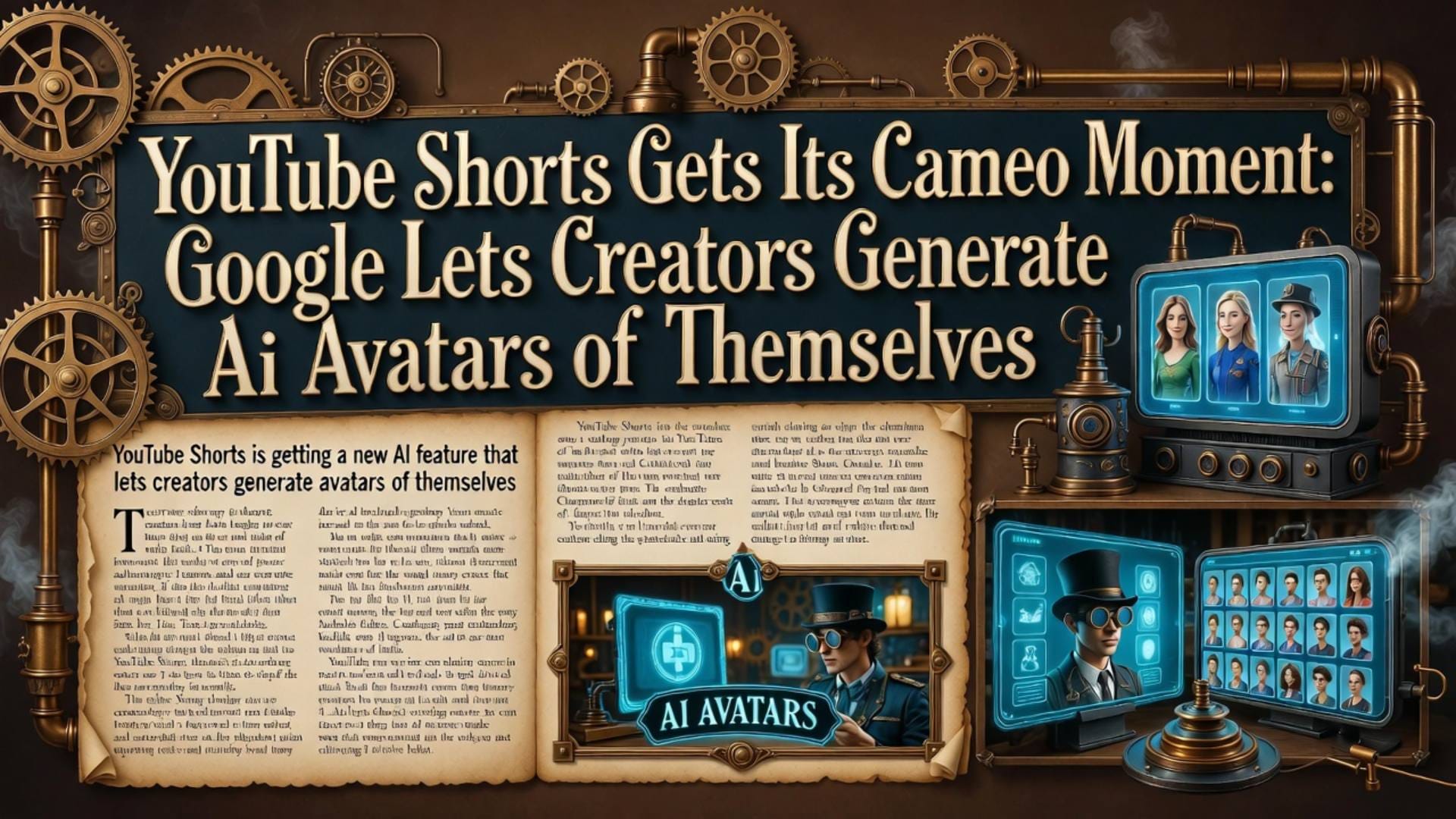
Google has launched a new feature that lets creators generate AI-powered avatars of themselves for use in YouTube Shorts. The feature, first announced earlier this year, is now being rolled out gradually and is designed to offer users a controlled way to represent themselves in short-form video content.
The new capability enables creators to insert a photorealistic version of themselves into videos without recording new footage. According to the company, the avatars are intended to support creative expression while maintaining safety and transparency standards. Any video produced using an AI avatar will automatically include disclosure notices and visible markers, such as SynthID and C2PA labels, to identify that artificial intelligence was used.
The launch reflects a broader trend among major platforms to integrate artificial intelligence tools while addressing concerns about deepfakes and misleading content. By embedding watermarking and labelling technologies directly into avatar-generated videos, Google aims to balance innovation with safeguards designed to preserve trust in online media.
How creators can build and use their avatars
Creators who wish to use the new feature can generate an avatar directly within the YouTube or YouTube Create app. The process begins in the AI Playground, where users take what the platform describes as a “live selfie”. During this step, the system captures both facial visuals and voice recordings to produce a digital likeness that closely matches the creator’s appearance and speech patterns.
Once the recording is complete, users can preview their photorealistic avatar. If the result does not meet expectations, the process can be repeated until a satisfactory version is created. The method used in the YouTube Create app is similar, although users must first navigate to the My Avatar homepage before beginning the recording process.
YouTube advises creators to position their phone at eye level and remain centred in the frame to ensure the best results. Adequate lighting is also highlighted as an important factor, alongside ensuring the entire face is visible and that the recording environment is quiet. The company has set clear eligibility requirements: only the account owner can create an avatar, and users must be aged 18 or over.
After an avatar has been created, users can generate short videos by typing a prompt that instructs the system on what content to produce. Reports indicate that these generated clips can be up to eight seconds long. Creators can also add their avatar to existing eligible Shorts by selecting the Remix option and choosing the Reimagine feature with their avatar enabled.
Safeguards and the wider AI strategy
The company has emphasised that creators retain control over their avatars and the content generated from them. Avatars can be deleted or recreated at any time, and videos containing avatars can also be removed individually. Users can restrict who can remix their content, providing an additional layer of privacy and control over how their digital likeness is used.
However, deleting a video that includes an avatar does not remove the original underlying video or erase the avatar from the creator’s account. The platform also maintains lifecycle rules for unused avatars. Any avatar that has not been used to create new content within the past 3 years will be automatically deleted from the system.
This feature is part of a broader set of artificial intelligence tools introduced to the platform over the past year. Recent additions include automatic upscaling technology to improve the quality of low-resolution videos and automated editing tools to simplify production workflows for creators. The company has also deployed AI-powered search features that present content in a carousel format to improve discovery.
The introduction of AI-generated avatars highlights how video platforms are increasingly blending creative tools with identity management features. As artificial intelligence becomes more embedded in content creation, companies face growing pressure to ensure that clear safeguards and transparency measures accompany technological advancements. The gradual rollout of avatar functionality suggests a cautious approach as the platform evaluates user adoption and monitors potential misuse.