


Adobe, NVIDIA and WPP have expanded their collaboration to integrate agentic AI into enterprise marketing and creative operations. The effort centres on enabling automated systems that can generate, adapt and activate content at scale while maintaining control over brand integrity, governance and compliance.
The initiative brings together Adobe’s creative and customer experience platforms, WPP’s media and marketing capabilities, and NVIDIA’s AI infrastructure. At its core is Adobe’s CX Enterprise Coworker, designed to coordinate workflows across content creation and customer experience delivery.
Coordinated workflows across creation and activation
The collaboration focuses on connecting content production with downstream marketing execution. Adobe is developing agents that can generate and version on-brand assets, while CX Enterprise Coworker orchestrates workflows from personalisation through to activation.
This aims to address the growing operational demand for continuous content delivery across multiple channels, audiences and product variations. The systems are positioned to support use cases such as dynamic retail campaigns, where offers, visuals and messaging can be updated across large-scale inventories in near real time.
By linking creative generation with customer engagement systems, the approach moves away from static campaign cycles towards ongoing, adaptive content delivery.
Governance and execution controls built into runtime
A central component of the deployment model is NVIDIA OpenShell, a secure runtime environment that governs how AI agents operate. The runtime uses a policy-based, containerised sandbox to ensure that agent actions remain observable, auditable and within defined constraints.
This addresses a key enterprise concern around autonomous systems, particularly when agents interact with sensitive data or trigger actions across multiple platforms. The OpenShell runtime enforces rules at the execution level, providing visibility into what an agent can do rather than relying solely on predefined policies.
Enterprises can also keep critical workflows within their own trust boundaries, including the integration of Adobe CX Intelligence into agent-driven processes.
Scaling content generation with proprietary data and 3D assets
The collaboration also extends to model customisation and content generation. Adobe Firefly Foundry, supported by NVIDIA infrastructure, enables organisations to tune AI models using proprietary datasets. This is intended to ensure that generated content aligns with brand identity and meets commercial usage requirements.
In parallel, Adobe’s cloud-based 3D digital twin solution has reached general availability. Built on NVIDIA Omniverse libraries and OpenUSD, the system allows persistent digital representations of products to be used in automated content creation.
These digital twins act as reusable assets that agents can deploy across formats, markets and configurations, supporting scalable production of high-fidelity marketing content.
Positioning agentic systems within enterprise marketing stacks
The integration of creative, performance and governance layers reflects an attempt to operationalise AI agents within existing marketing environments. By combining generation, orchestration and execution within a controlled framework, the collaboration targets enterprise use cases that require both scale and oversight.
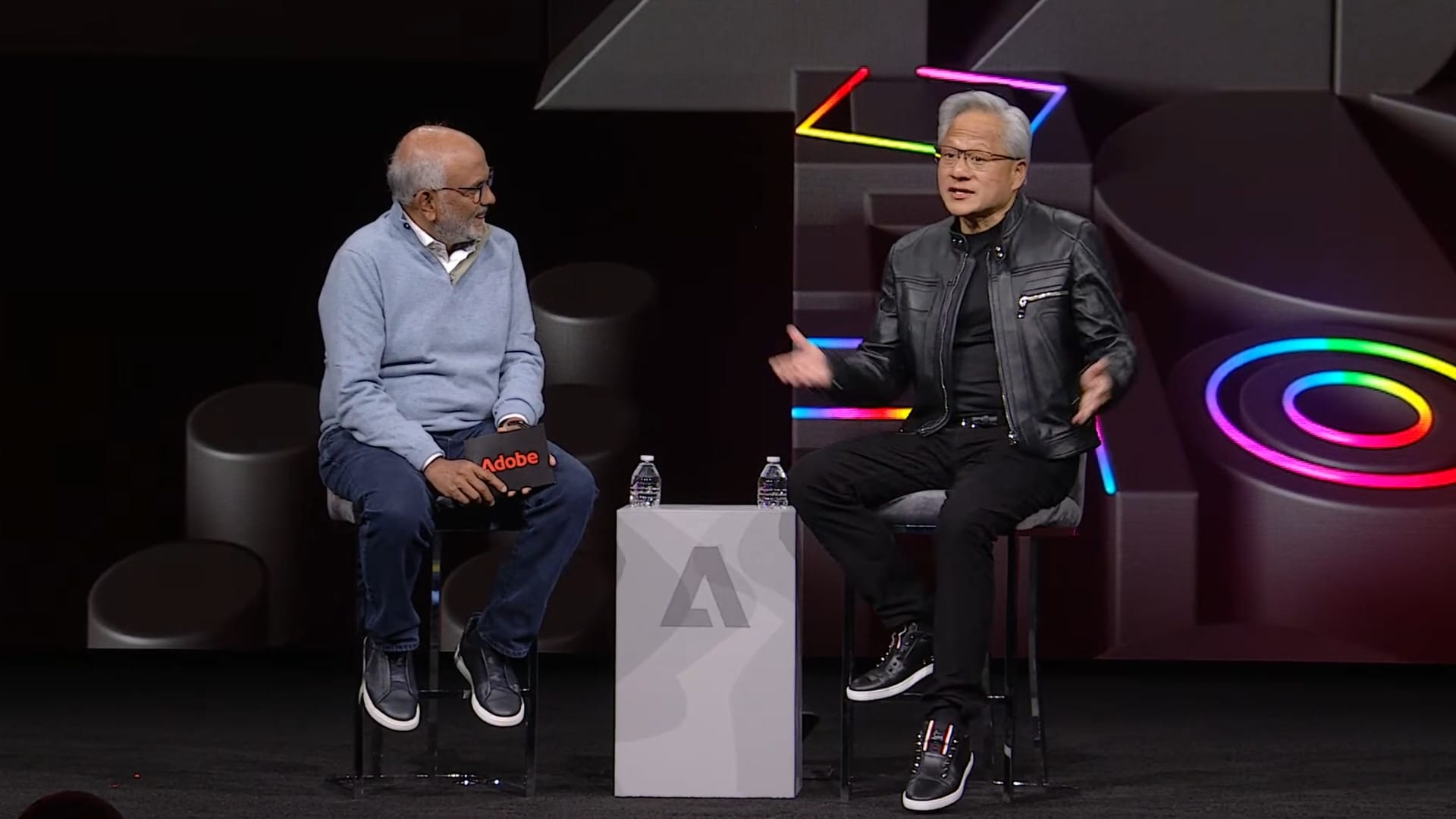
A live demonstration of CX Enterprise Coworker, powered by NVIDIA Agent Toolkit and Nemotron models, is scheduled during Adobe Summit’s day-two keynote on 21 April.
The combined system is positioned as a foundation for marketing operations where automated agents can manage multi-step workflows while adhering to defined policies and brand requirements.