


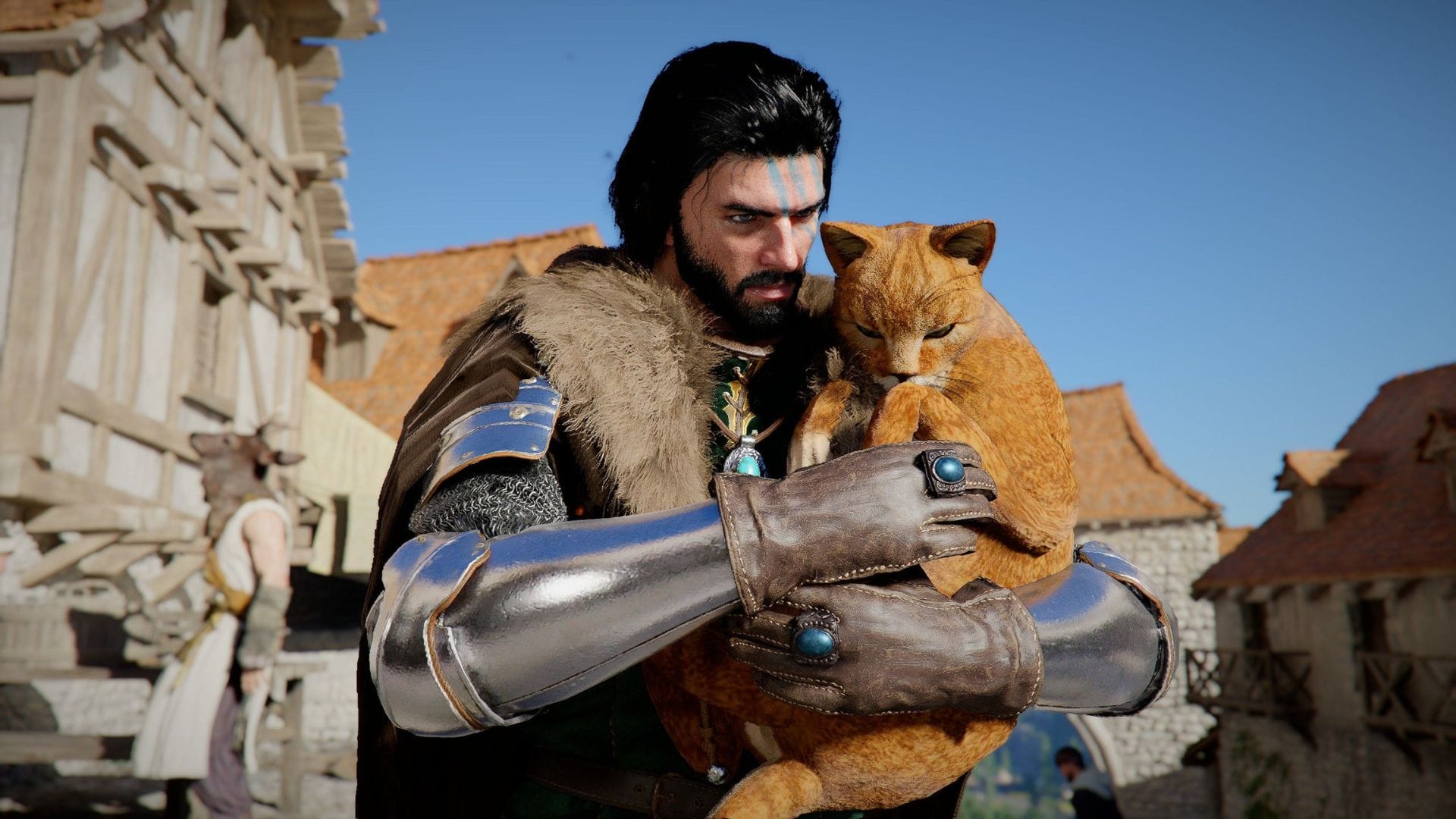
Players of the newly released open-world role-playing game Crimson Desert have prompted an apology from its developer after discovering that some in-game artwork had been created using artificial intelligence tools and mistakenly left in the final version.
The South Korean studio Pearl Abyss confirmed the issue shortly after the game’s launch, acknowledging that several two-dimensional visual props had been produced using what it described as “experimental AI generative tools”. According to the developer, these assets were intended to be temporary placeholders but were not replaced before release.
The issue came to light on 18 March, when players began sharing images and concerns on social media, pointing out irregularities in certain textures and visual elements. In response, Pearl Abyss issued a public statement on X, saying: “Following reports from our community, we have identified that some of these assets were unintentionally included in the final release.”
We would like to address questions regarding the use of AI in Crimson Desert.
— Crimson Desert (@CrimsonDesert_) March 22, 2026
During development, some 2D visual props were created as part of early-stage iteration using experimental AI generative tools. These assets helped us rapidly explore tone and atmosphere in the earlier…
Developer response and corrective measures
In its statement, Pearl Abyss stressed that the use of generative AI had been limited in scope and was only intended to support the development process. The company explained that such tools were used in a supplementary capacity when creating certain 2D prop assets, which would normally be replaced by final artwork before launch.
However, the studio admitted that this process had not been completed as planned. As a result, several AI-generated elements remained in the shipping version of the game. The company has since updated its Steam page to include a disclosure confirming the use of generative AI during development, noting that such assets are typically temporary.
To address the issue, Pearl Abyss has committed to conducting what it described as a “comprehensive audit of all in-game assets”. The developer said it is currently reviewing every element within the game to identify any remaining AI-generated content that should be replaced.
The company also confirmed that corrected assets will be introduced through future updates. These changes are expected to be delivered in a series of patches, although no specific timeline has been announced. Alongside the technical fixes, Pearl Abyss indicated that it will reassess its internal communication processes to ensure greater “transparency and consistency” when informing players about development practices.
Industry context and growing scrutiny of AI use
The situation surrounding Crimson Desert reflects a broader debate within the video games industry over the use of generative AI tools. While such technologies are increasingly being adopted to streamline development, their use has drawn criticism, particularly when it is not clearly disclosed to players.
In recent months, several studios have faced similar controversies. Late in 2025, French developer Sandfall Interactive was stripped of both its Game of the Year and Debut Game awards at the Indie Game Awards after it was revealed that generative AI had been used in Clair Obscur: Expedition 33. In that case, placeholder textures created with AI tools had also been mistakenly left in the final release.
Another example involves Embark Studios, the developer behind Arc Raiders, which has faced player backlash over the use of AI-generated materials. The studio has since pledged to replace those assets, echoing the approach now being taken by Pearl Abyss.
These incidents highlight players’ growing expectations for transparency around the use of AI in creative processes. While some developers view AI as a practical tool for prototyping and efficiency, critics argue that undisclosed use can undermine trust and raise concerns about artistic integrity.
Transparency challenges and future implications
The Crimson Desert controversy underscores the challenges developers face in balancing innovation with accountability. As generative AI tools become more sophisticated and widely available, studios are under pressure to establish clear guidelines on when and how to use such technologies.
For Pearl Abyss, the immediate priority is rebuilding trust with its player base. By acknowledging the oversight and outlining steps to correct it, the company is demonstrating accountability. Its promise to improve communication suggests a recognition that transparency is becoming a key expectation within the gaming community.
At the same time, the incident raises questions about quality control processes in modern game development. The inclusion of placeholder assets, whether AI-generated or not, points to potential gaps in final review stages, particularly in large-scale projects with complex production pipelines.
Looking ahead, the industry may see stricter disclosure requirements, either through platform policies or community pressure. Digital storefronts such as Steam have already begun encouraging developers to clarify their use of AI-generated content, signalling a shift towards greater openness.
For now, Crimson Desert serves as another example of how quickly player communities can identify and respond to perceived issues. As developers continue to experiment with new tools, maintaining clear communication and rigorous quality checks will be essential to avoid similar controversies.