

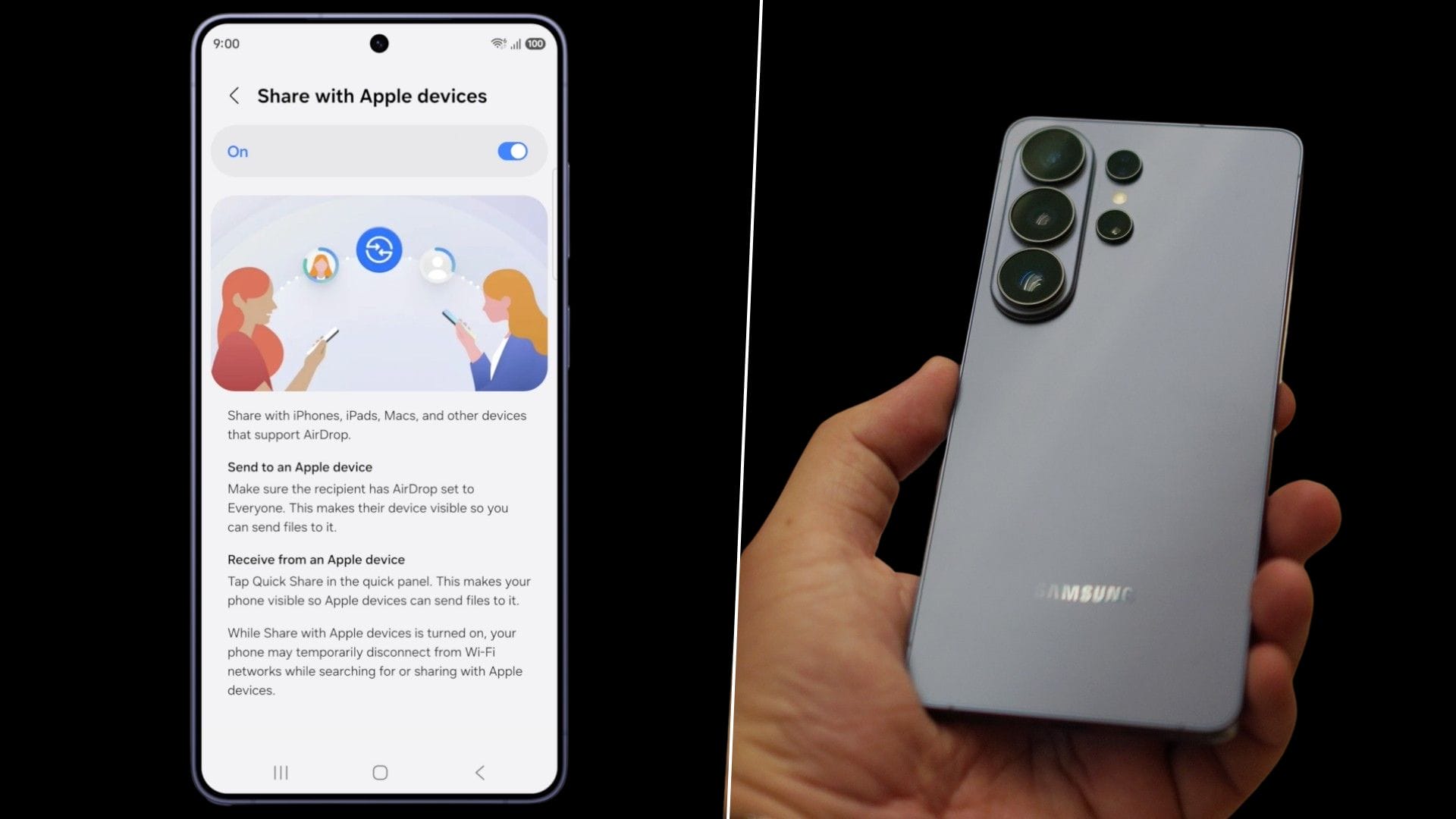
Samsung has announced that its latest Galaxy S26 series will support file sharing with Apple devices through an updated version of its Quick Share feature. The move follows earlier efforts by Google to expand cross-platform sharing capabilities between Android and Apple ecosystems.
The new functionality allows users of Galaxy S26 devices to send and receive photos, videos, and files to and from Apple devices in a way similar to Apple’s AirDrop. The feature aims to simplify file transfers between different operating systems, addressing a long-standing limitation for users switching between Android and iOS devices.
Cross-platform sharing expands with Quick Share update
The update builds on work first introduced by Google, which launched Quick Share on its Pixel 10 smartphones last year. At the time, the company outlined plans to extend compatibility across a wider range of Android devices and improve interoperability with Apple products.
Samsung’s implementation now brings that vision closer to reality. With the updated Quick Share feature, Galaxy S26 users can exchange files directly with Apple devices, including iPhones, without requiring third-party apps or complex setup processes.
To receive files from an Apple device, users must adjust their visibility settings to “everyone for 10 minutes”. This mirrors the temporary open-sharing mode commonly used in AirDrop, ensuring that transfers remain secure while still being convenient.
The development represents a notable shift in how mobile ecosystems interact. Historically, file sharing between Android and Apple devices has required additional applications or cloud-based solutions, often adding friction to what would otherwise be a simple task.
Gradual rollout begins in South Korea
According to Samsung, the rollout of the new feature will begin on 23 March in South Korea. The company plans to expand availability to other regions in phases, including North America, Europe, Hong Kong, Japan, and Latin America.
This staggered release strategy aligns with Samsung’s approach to major software updates, enabling the company to monitor performance and address issues before a wider global launch. Users in early rollout regions will gain access first, with broader availability expected in the coming months.
Samsung has not provided an exact timeline for when all markets will receive the update, but it has indicated that expansion will be relatively swift. The company also suggested that more devices beyond the Galaxy S26 series could gain support in the near future.
The update reflects increasing collaboration, or at least compatibility, between competing technology ecosystems. While Apple’s AirDrop remains exclusive to Apple devices, Android manufacturers are working to replicate its ease of use across platforms.
Industry push for better interoperability
The introduction of AirDrop-style functionality on Android devices highlights a broader industry trend towards improved interoperability. Both Google and Samsung are responding to user demand for simpler ways to share content across different devices and operating systems.
For years, the divide between Android and Apple ecosystems has been a point of frustration for consumers. Sending files between the two platforms typically requires messaging apps, email, or cloud storage services, each adding extra steps to the process.
By integrating cross-platform sharing directly into the operating system, companies aim to remove these barriers. The Quick Share update effectively reduces the gap between the Android and Apple experiences, even if Apple does not officially provide full AirDrop compatibility.
Samsung has also indicated that additional devices will gain compatibility over time, suggesting that this feature could become a standard across its broader product range. If widely adopted, such functionality may set a new expectation for seamless sharing across device brands.
The move could also increase competition in user experience, pushing other manufacturers to prioritise similar features. As ecosystems become more interconnected, the focus is shifting from exclusivity towards convenience and accessibility.