



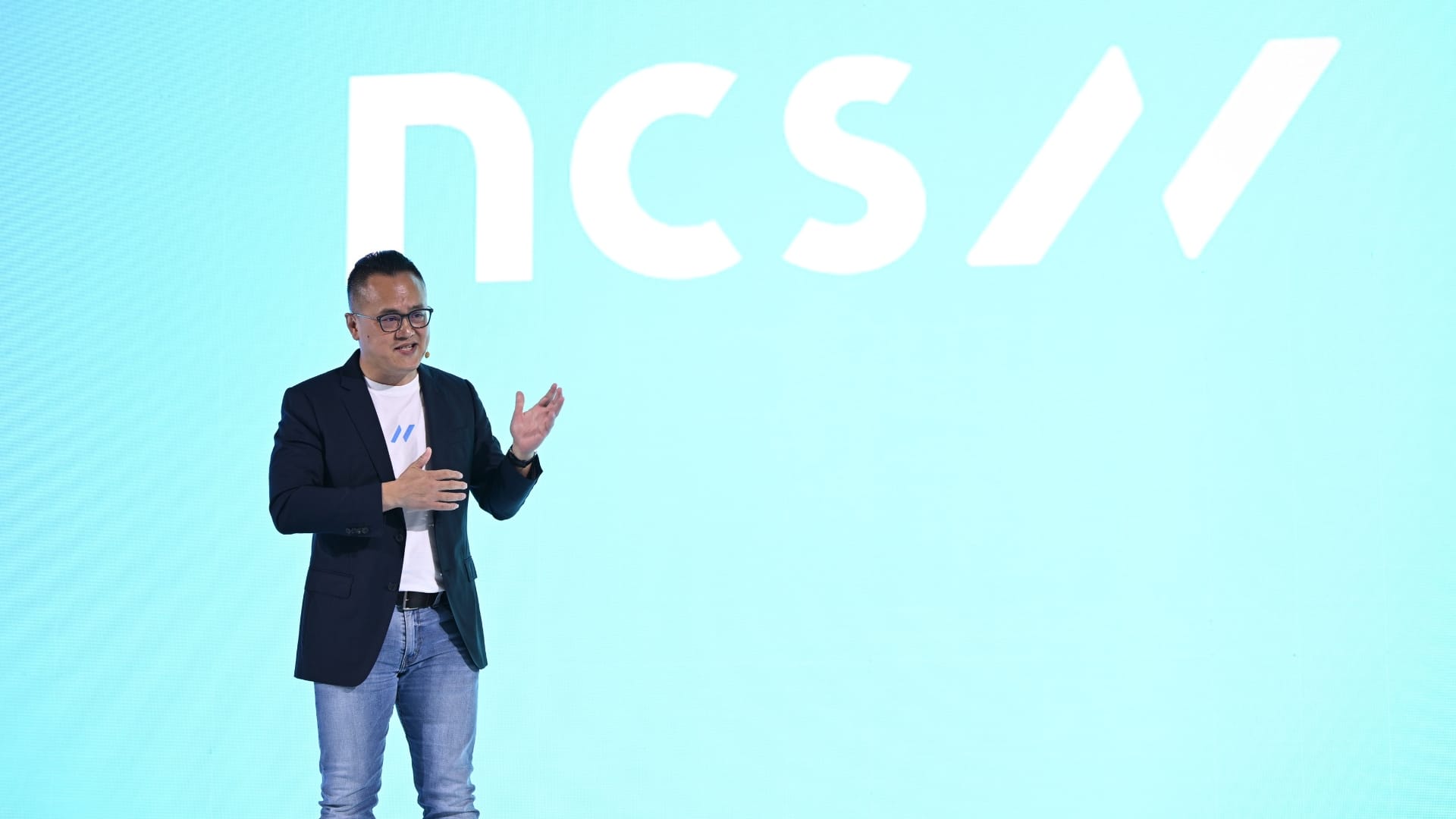
NCS Impact 2026 put a sharper spotlight on a practical problem facing enterprise AI: how to move from controlled pilots into live systems where errors affect patients, students, commuters and public safety operations.
At the forum in Singapore on 9 July, NCS expanded its Sunshine.AI suite and outlined new partnerships, but the more useful discussion was about what happens when AI becomes part of healthcare workflows, classroom support, transport operations and public safety infrastructure.
For many organisations, early generative AI use has been relatively contained. Teams can test chatbots, summarisation tools and coding assistants without changing how the wider organisation works. Live deployment is different. Once AI is asked to guide decisions, coordinate tasks or interact with sensitive data, organisations have to settle questions that pilots often avoid.
They need to know what data the system can use, when a person must intervene, how errors are handled and who remains accountable when AI influences a decision. Those questions become more important in sectors where service continuity, trust and safety are part of the operating model.
AI’s impact varies by sector
Minister Ong Ye Kung, Singapore’s Coordinating Minister for Social Policies and Minister for Health, used his keynote to push back against broad claims about AI and jobs. His argument was that AI’s impact depends on the industry, the nature of the task, market demand, consumer behaviour and the response from workers, employers and regulators.
That points to a more uneven labour picture than the usual automation debate suggests. Some sectors are likely to keep adding jobs because demand is rising. Minister Ong cited healthcare, finance, energy and AI-related manufacturing as examples. Other sectors may keep their existing workforce but use AI to lift productivity, while routine and process-heavy work faces greater pressure.
This distinction helps explain why enterprise AI is moving at different speeds across industries. In some settings, AI can be adopted quickly as a productivity layer. In others, especially where public trust or safety is involved, the system must be introduced more deliberately.
Healthcare puts human judgement at the centre
Minister Ong further shared that healthcare AI cannot be treated as a tool looking for a problem. It needs to sit on top of a strong digital operating environment, good quality data and a policy structure that defines how it should be used.
Singapore is still building that base. The public healthcare system is working towards a common electronic medical record system by 2028. Other systems, including the National Electronic Health Record, Trust, Helix and Symphony, Singapore’s medical foundation AI model, are intended to support better data access, analytics and localised clinical AI development.
AI can assist with diagnostics, clinical coding, medical note-taking, appointment prediction and early identification of chronic disease risk. But in healthcare, accuracy alone is not enough. A model may detect an anomaly, but a clinician still has to decide whether it is meaningful, whether treatment is needed and how to explain that decision to a patient.
That same tension appeared in IHH Healthcare’s remarks. Kwok Quek Sin, Group Chief Business Technology Officer at IHH Healthcare, described AI use across clinical quality, operational efficiency, cost management and patient experience. One example was AI-assisted rostering, deployed across eight hospitals and four markets, covering more than 2,000 nurses and reducing rostering effort by more than half.
The value of that use case is not the figure alone. It points to where healthcare AI may gain traction first: in areas that reduce administrative pressure and improve coordination without weakening clinical accountability.
Education and transport focus on early visibility
Education and transport offered a different view of the same issue. In both cases, AI was presented as a way to make problems visible earlier, so that people can respond with better information.
At Ngee Ann Polytechnic, Senior Director and Registrar Lynn Fong described an AI adaptive learning assistant designed to identify gaps that students may not raise themselves. Students can ask questions in real time and receive feedback matched to their level of understanding. Educators can see which topics are causing difficulty and which students may need earlier support.
The system is framed around support rather than substitution. Its usefulness depends on whether it gives educators better visibility while preserving their role in coaching, mentoring and judgement. That balance will allow education institutions adopt AI without encouraging over-reliance or shallow learning.
In transport, James Kwok, Director, Transport Technology at the Land Transport Authority, described Solaris, an AI-enabled incident surveillance system developed with NCS. Road operators already receive data from multiple sources, but those signals can be delayed, incomplete or noisy. Solaris brings incident detection, validation and response coordination into a single operational view.
The operational value lies in faster situational awareness. AI helps operators make sense of weak signals and validate incidents more quickly, but the response still depends on human decision-making.
Public safety brings sovereignty into focus
Public safety adds another layer to the enterprise AI debate. For agencies dealing with sensitive operational workloads, the issue is not only whether AI works, but where the data goes and whether access to the system can be guaranteed.
Ang Chee Wee, Chief AI Officer and Assistant Chief Executive, Digital and Enterprise at HTX, said public safety agencies cannot freely use commercial AI tools for all workloads. Data security and assured access are critical because mission systems cannot depend on platforms that may become unavailable due to commercial decisions, export restrictions or other external constraints.
That is the context for NGINE, the Home Team’s sovereign AI cloud, developed with NCS. The platform supports secure AI workloads, including video analytics, in environments where classified data, operational continuity and governance are central.
HTX is also looking beyond software through a planned Home Team Humanoid Robotics Centre. The aim is to explore embodied AI and humanoid robotics for public safety, particularly in hazardous or dynamic environments where robots could reduce risk to officers.
NCS looks to package the operating model
NCS’s commercial direction sits behind these examples. The company is trying to turn operational lessons from different sectors into repeatable platforms, services and delivery models.
Sunshine.AI is part of that effort, covering agent foundations, no-code application building, enterprise assistants, AI safety and physical AI. Its AI Playbook, based on more than 100 projects, focuses on common reasons AI programmes stall, including unclear cost, unchanged processes, unready data, ungoverned agent development and unknown security risks.
The company is also building talent programmes with SUTD, NUS SCALE, Shanghai Jiao Tong University’s Asia-Pacific Graduate Institute and AI Singapore, while working with Digital Industry Singapore to hire more than 130 AI practitioners over three years.
Enterprise AI is moving from tool adoption into operating design. The organisations that scale it will need more than working models. They will need reliable data, defined accountability, secure infrastructure and a clear view of where human judgement remains essential.


