


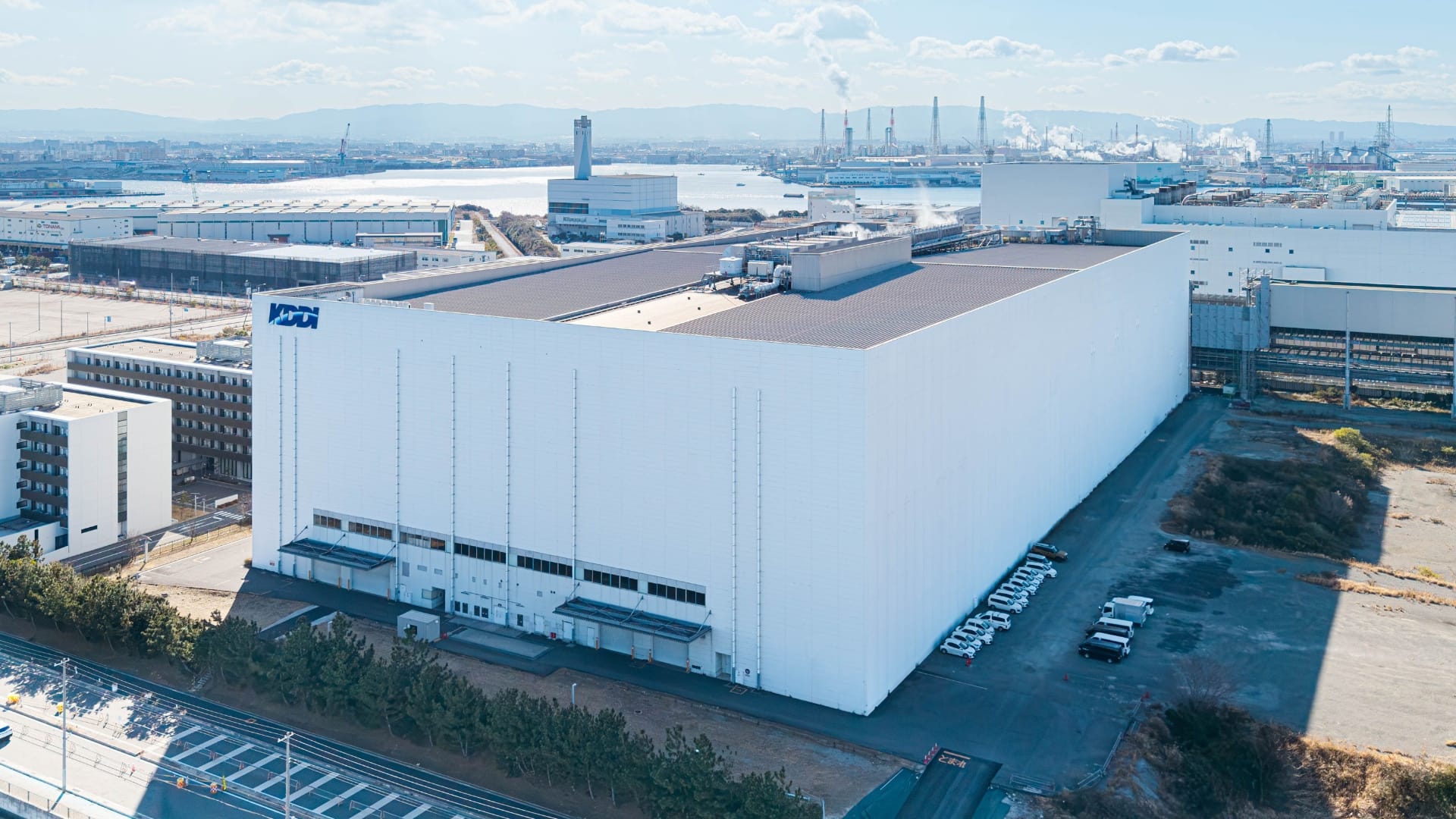
Nokia and KDDI Corporation have demonstrated quantum-safe optical transport capabilities at KDDI’s new Sakai Data Center, positioning the facility to support advanced artificial intelligence workloads and distributed data centre operations across Japan. The announcement marks a step towards integrating post-quantum security measures into high-capacity optical networks designed for AI training, inference and large-scale data analytics.
The demonstration took place at KDDI’s Sakai Data Center, described as a next-generation facility built to accommodate the growing computational demands of AI-driven services. As enterprises and public sector organisations scale real-time processing and data-intensive applications, the resilience and security of underlying transport networks have become central to infrastructure planning.
By validating quantum-safe optical transport in a live data centre environment, the two companies are addressing concerns around the long-term viability of conventional cryptographic standards in the face of emerging quantum computing capabilities. The network architecture tested at Sakai integrates built-in cryptography to protect personal data, critical national infrastructure and sensitive AI workloads during transmission.
Quantum-safe transport for distributed AI workloads
The demonstration leveraged Nokia’s 1830 Photonic Service Switch with C+L Band and its 1830 Security Management Server. Together, these systems enabled KDDI to validate a secure, scalable and AI-ready optical transport infrastructure across distributed facilities.
Nokia’s optical technologies are designed to deliver high-capacity data transport while maintaining data privacy and network resiliency. At the Sakai site, the configuration supported at-speed quantum-safe encryption, aiming to safeguard data in transit as it moves between data centres and across metropolitan and regional networks.
As AI data centres increasingly operate in a distributed model, with training clusters, edge processing sites and analytics hubs located in different regions, optical backbones are required to handle significant east-west traffic flows. The ability to encrypt this traffic at optical layer speeds without compromising performance is becoming a core requirement for operators building AI-ready infrastructure.
Ron Johnson, Senior Vice President and General Manager, Optical Networks, at Nokia, said: “This groundbreaking initiative sets a new benchmark for advanced AI-ready data center connectivity. As KDDI continues its quantum-safe, AI-ready data center infrastructure build out, our partnership will deliver secure and scalable digital services in Japan and beyond. Nokia’s optical transport solutions meet the demands of modern AI workloads by delivering trusted performance, while at the same time reducing cybersecurity risks, protecting critical AI data in flight for enterprises, governments, and critical infrastructure providers.”
Strengthening Japan’s digital infrastructure resilience
KDDI framed the demonstration as part of a broader strategy to future-proof Japan’s digital infrastructure against both performance bottlenecks and emerging cybersecurity threats. As AI adoption accelerates across sectors including finance, manufacturing and public services, communications infrastructure must balance low latency, high throughput and advanced security controls.
Tetsuo Mukai, General Manager, Access Network Technical Division, KDDI, said: “High levels of security and performance are essential for the communications infrastructure that underpins AI. Nokia’s optical transport solutions are a perfect fit for these requirements and were instrumental to the success of this demonstration. As AI data centers are deployed in a distributed manner across Japan, we will continue to work closely with Nokia to advance the development of cutting-edge quantum-safe, and resilient networks that seamlessly connect these facilities.”
The emphasis on quantum-safe networking reflects growing industry recognition that current public key cryptography methods may be vulnerable once large-scale quantum computers become viable. While such systems are not yet operational at scale, infrastructure investments made today are expected to remain in service for years, prompting operators to integrate quantum-resistant mechanisms early in deployment cycles.
By incorporating quantum-safe encryption into optical transport layers, KDDI aims to protect data as it moves between facilities, reducing exposure to interception or decryption risks over time. This approach is particularly relevant for sectors handling sensitive information, including government agencies, financial institutions and operators of critical infrastructure.
Positioning for AI-era connectivity
The collaboration between Nokia and KDDI signals a broader shift in how telecom operators and equipment vendors are aligning optical networking strategies with AI-era requirements. High-performance connectivity is increasingly seen as foundational to AI competitiveness, particularly as training models grow in size and inference workloads become more latency-sensitive.
The Sakai Data Center demonstration illustrates how optical transport systems are evolving beyond raw bandwidth provisioning. Operators are now seeking integrated solutions that combine capacity, automation and security within a unified architecture, enabling scalable interconnection across multiple data centre sites.
For Japan, where data sovereignty and infrastructure resilience are policy priorities, quantum-safe optical transport may become a defining feature of next-generation backbone networks. As KDDI expands its distributed AI data centre footprint, the integration of high-capacity C+L band systems and centralised security management is likely to form part of a longer-term infrastructure roadmap.
The demonstration underscores the role of optical networks in supporting a safer and more connected society, particularly as AI applications become embedded in economic and public sector systems. By validating quantum-safe capabilities at an operational facility, Nokia and KDDI have taken an early step towards aligning high-speed transport infrastructure with the security expectations of the AI era.