

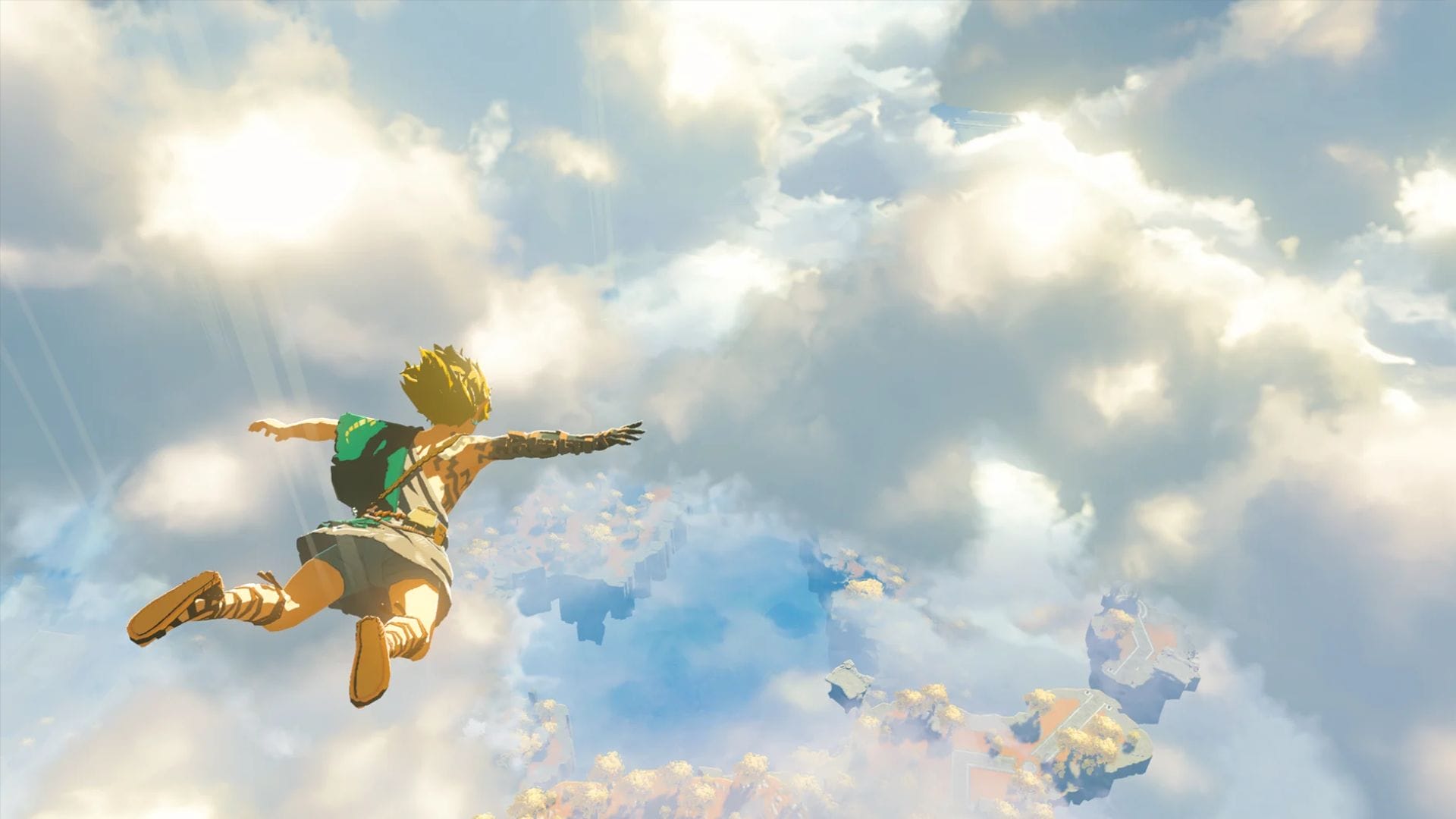
Nintendo’s The Legend of Zelda series has reached its 40th anniversary, marking four decades since the original game launched on the Famicom Disk System in 1986. The franchise has long been associated with high fantasy, featuring swords, magic, mythical creatures and a medieval-inspired kingdom of Hyrule. Yet, behind the familiar fantasy setting, the series has repeatedly flirted with ideas drawn from science fiction, revealing a parallel creative path that Nintendo has never fully explored.
Developers have occasionally hinted that the series could have taken a very different direction. From alien invasions to time travel powered by futuristic technology, Zelda has embraced science fiction themes several times. These concepts, although mostly abandoned, have influenced the visual and narrative identity of modern Zelda titles in subtle ways.
Early concepts hinted at a futuristic direction
One of the most unusual glimpses into Zelda’s alternative past emerged in 2017, when key developers from The Legend of Zelda: Breath of the Wild spoke at the Game Developers Conference. Director Hidemaro Fujibayashi, art director Satoru Takizawa and technical director Takuhiro Dohta discussed early concepts that never made it into the final game, including a pitch titled The Legend of Zelda: INVASION.
During the presentation, Takizawa introduced slides depicting a UFO descending onto Hyrule, alien autopsies, spacesuits and futuristic versions of established characters. He described the idea candidly, saying, “This is where things got a bit dodgy. And here’s an invasion from outer space.” The concept art also showed a radically redesigned Link, wearing casual modern clothing and riding a motorcycle, highlighting just how far the team had pushed to move away from traditional fantasy.
Although the idea was ultimately discarded, the developers acknowledged that elements of science fiction still shaped the final version of Breath of the Wild. The Sheikah technology in the game, including mechanical Guardians and the Sheikah Slate device used by Link, carries a distinctly futuristic aesthetic. The glowing machinery and advanced materials stand in contrast to Hyrule’s ancient ruins and medieval architecture, suggesting remnants of a more technologically advanced civilisation embedded in the game’s lore.
Time travel and microchips in the original vision
The idea of blending fantasy with science fiction predates modern Zelda titles. Series creator Shigeru Miyamoto has previously revealed that the original concept for The Legend of Zelda involved time travel and futuristic technology. In an interview with the French publication Gamekult, Miyamoto confirmed that the earliest drafts imagined a world where ancient knights and shields coexisted with devices from the future.
In this early vision, the Triforce’s power was not purely magical but linked to advanced components such as microchips and computer parts. This concept hinted at a narrative that would bridge eras, combining medieval fantasy with science fiction in an unusual way for the mid-1980s. Miyamoto also suggested that the Sheikah Slate in Breath of the Wild might be a subtle callback to these early ideas, blending modern technology into the series’ mythos.
Science fiction concepts continued to surface in later development cycles. Concept art for A Link to the Past, released in 1992, featured futuristic, cyberpunk-inspired designs for Princess Zelda and other elements. The title itself has since been interpreted as a missed opportunity for a more explicit time-travel storyline, as the final game focused instead on parallel dimensions rather than journeys through time.
A conservative future for Nintendo’s flagship fantasy series
Despite these recurring experiments, Nintendo has never fully committed to transforming Zelda into a science fiction franchise. After 40 years, it seems unlikely that Link and Princess Zelda will embark on a space-faring adventure or explore distant galaxies. Nintendo has increasingly expanded its intellectual properties into films, streaming projects and theme parks, a shift that may encourage a more consistent and recognisable brand identity.
Industry observers note that major companies often become more cautious as their franchises grow in cultural and commercial importance. Zelda’s fantasy identity is deeply rooted in popular culture, and radical changes could risk alienating long-time fans. However, creative teams working on the series have repeatedly shown interest in pushing beyond the established formula, suggesting that the allure of science fiction has never entirely faded.
Although many of these concepts remained unused, their traces continue to shape the series. Ancient advanced technology, mysterious civilisations and futuristic motifs have become part of Zelda’s visual language, even as the games maintain their core fantasy setting. Developers’ fascination with science fiction highlights the creative tension between tradition and experimentation that has driven the franchise for decades.
As Nintendo looks ahead to the future of The Legend of Zelda, the possibility of a more overt science fiction entry remains speculative. Yet, the history of abandoned concepts and subtle influences suggests that the idea has never truly disappeared. For now, Link remains firmly grounded in Hyrule’s forests, dungeons and castles, but the series’ creators continue to imagine what might happen if he ever ventured beyond the stars.