

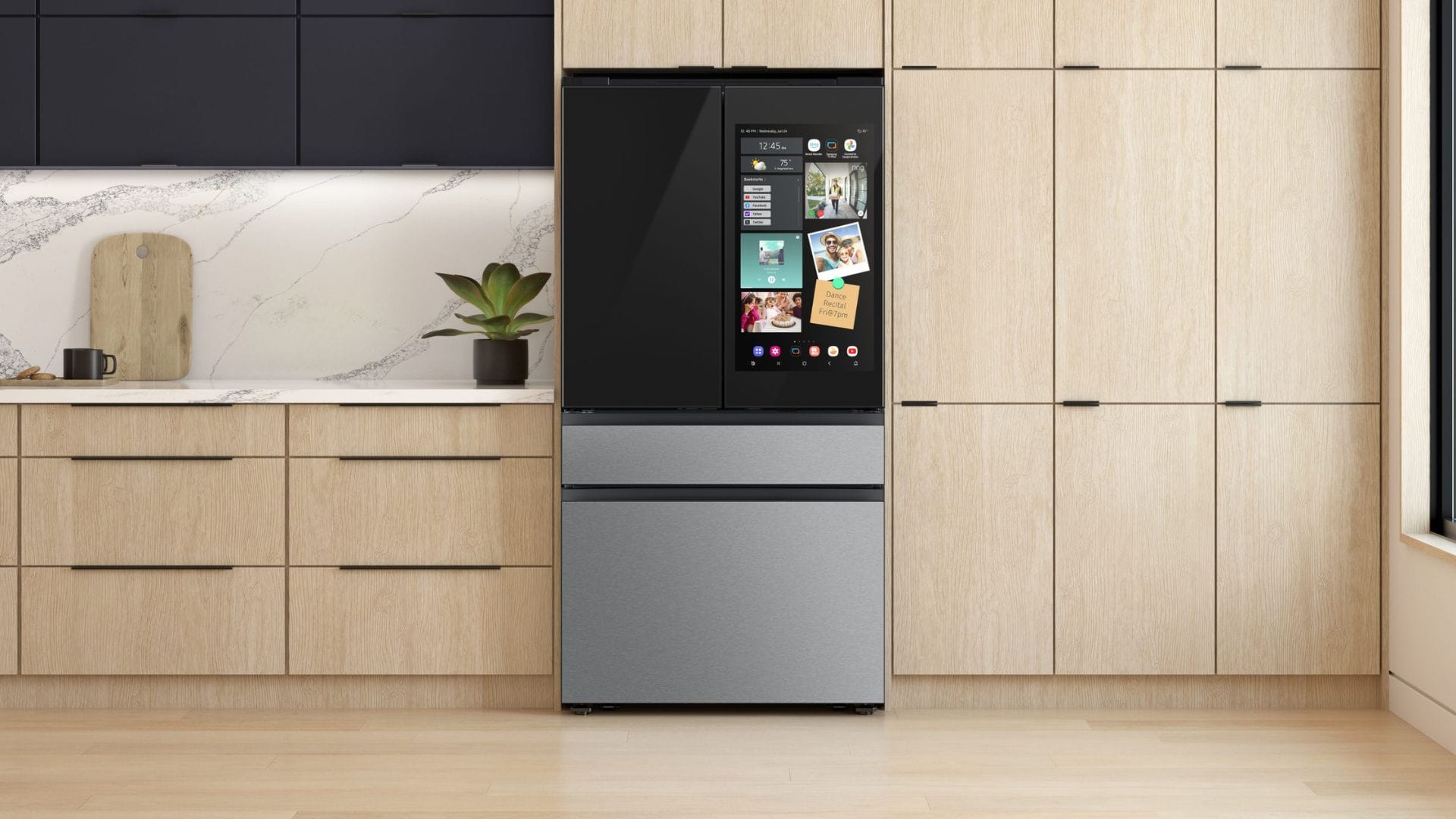
Samsung has released a major software update for its Bespoke refrigerator range, significantly expanding the artificial intelligence features available across its smart appliances. The update introduces deeper AI-powered food recognition, improved voice controls and remote diagnostic tools designed to make the company’s connected refrigerators more practical for everyday use.
The update marks one of Samsung’s biggest efforts yet to integrate advanced machine learning into household appliances. While AI-powered refrigerators have existed for several years, many of their features have often been criticised for being limited or inconvenient. Samsung now appears to be addressing those concerns by combining its existing on-device technology with Google’s Gemini AI models.
The company said the update increases the number of foods the refrigerator can recognise from just over 100 to more than 2,000. The software also aims to reduce the need for users to enter information when storing groceries manually.
Samsung broadens AI food recognition capabilities
Samsung first introduced AI-based food management tools to its Bespoke refrigerators several years ago. Earlier versions of the technology could identify around 60 fresh food items and roughly 50 packaged goods. While the feature offered a glimpse into the future of connected kitchens, it still required users to enter additional details such as quantity and storage dates.
The latest software update attempts to streamline that process. By integrating Google Gemini’s cloud-based AI models with Samsung’s own object recognition system, the refrigerators can now identify a far wider range of products and ingredients.
The upgrade requires the refrigerator to be connected to Wi-Fi, although Samsung noted that many of its smart features already depend on internet connectivity. Existing functions include calendar integration, media playback and smart home controls.
Early testing of the updated system suggests that the expanded recognition tools are considerably more capable than before. The refrigerator can now identify niche products and specific brands with greater accuracy. In one example, the AI successfully recognised a can of Bull Head Shallot Sauce, a Taiwanese ingredient commonly used in Asian cooking.
The system can also distinguish between similar products, such as Diet Coke and Coke Zero, while tracking multiple quantities of the same item. According to testing, results are usually generated within seconds despite relying partly on cloud-based processing.
Samsung has also introduced smarter food tracking tools. The refrigerator can now monitor how long certain fresh foods have been stored and provide reminders when products may be nearing expiration. For example, the system can alert users to check avocados that have been inside the fridge for an extended period.
The AI Food Manager has also gained shopping-related features. If the refrigerator detects that a frequently used item is regularly removed and replaced, it may suggest adding that product to a shopping list. The information can then be accessed through a connected smartphone while shopping.
The improvements also extend to recipe suggestions. Because the refrigerator now has a more accurate understanding of the ingredients stored inside, it can recommend meals based on available food rather than requiring users to search manually.
New voice controls and remote repair tools added
Alongside the expanded food recognition features, Samsung has updated the refrigerator’s voice controls using Gemini AI. Users can now ask the appliance to adjust settings, provide maintenance information or assist with troubleshooting.
The refrigerator can also display tutorials to help owners resolve certain issues themselves. Samsung said this functionality is intended to simplify maintenance and reduce the need for support calls.
For more complicated problems, Samsung has introduced a new system called Reliability AI. The feature monitors appliance components and attempts to identify faults before they become serious.
Samsung said Reliability AI could also support remote servicing. In some situations, customer service agents may be able to make adjustments without sending a technician to a home. One example provided by the company involved an ice maker producing clumped ice cubes. According to Samsung, support staff could remotely reduce the amount of water entering the ice tray to resolve the issue.
The company stressed that users must provide explicit consent before service personnel can access appliance diagnostic data. Samsung added that sharing this information could help technicians diagnose problems more quickly and arrive better prepared if an in-person repair is required.
Despite the expanded use of Google’s AI models, Samsung continues to rely on Bixby as the refrigerator’s primary voice assistant. Users will not see direct Gemini branding on the appliance’s interface.
Samsung still faces challenges with AI reliability
Although the software update represents a significant improvement, the system still experiences occasional inaccuracies and AI-related errors.
Testing revealed that the AI can sometimes make incorrect assumptions when identifying objects. In one instance, the system reportedly mistook a brightly coloured bandage on a user’s finger for a vegetable while groceries were being placed back inside the fridge.
The AI can also occasionally produce incomplete or partially incorrect product labels. During testing, a tub of plant-based cream cheese was identified as “Philadelphia Plant-based”. However, the system had only interpreted the text visible on the lid rather than fully understanding the product.
These limitations reflect broader challenges facing AI-powered consumer technology. Current machine learning systems can still be overconfident or prone to so-called hallucinations, where software generates inaccurate conclusions despite appearing certain.
Even with these issues, the latest update appears to move Samsung closer to making AI-equipped appliances genuinely useful rather than simply experimental. Earlier versions of the technology often felt more like demonstrations of future potential than practical household tools.
The improvements to grocery tracking, automatic shopping reminders, and recipe recommendations suggest that Samsung is increasingly focusing on features that fit naturally into everyday routines. While the software is not flawless, the expansion from around 100 recognised items to more than 2,000 represents a major leap forward in functionality.
Samsung’s latest update highlights the growing competition among technology companies to bring generative AI into home appliances. As AI systems continue to improve, connected devices such as refrigerators may become more capable of assisting with daily household management.