


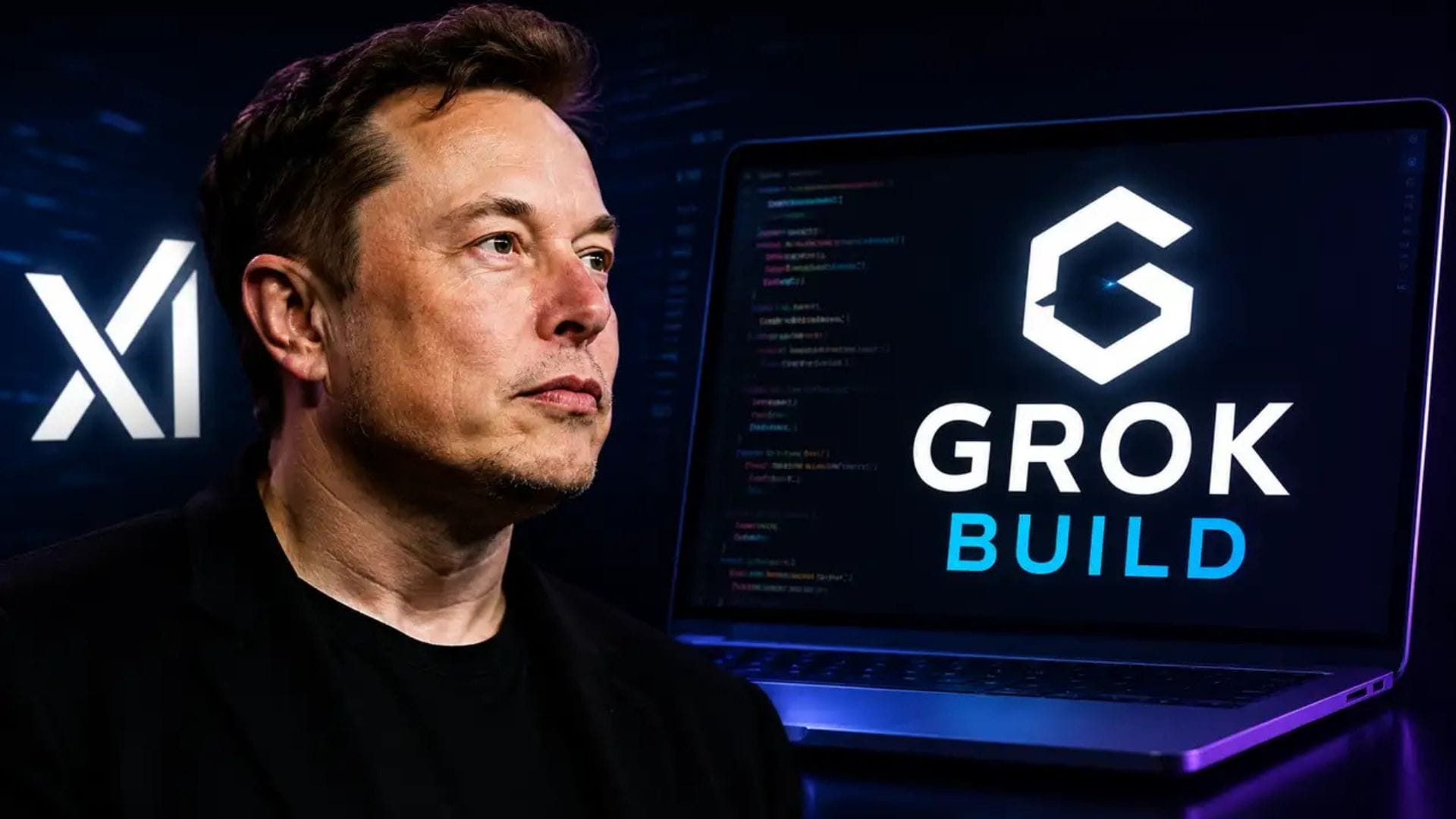
xAI has introduced a new coding agent, Grok Build, as the artificial intelligence company seeks to strengthen its position in the increasingly competitive software development market. The tool is designed to compete with rival coding assistants, including Anthropic’s Claude Code and similar offerings from OpenAI.
The company described Grok Build as a “powerful new coding agent and CLI for professional software engineering and complex coding work”. The release marks another attempt by xAI to expand the capabilities of its Grok platform beyond chatbot functions and into advanced coding assistance for developers and engineering teams.
At present, the product remains in an early beta phase and is only available to SuperGrok Heavy subscribers, who pay US$300 per month for access to the premium service. Users can download the beta version directly from xAI’s website before signing into their accounts to begin using the platform.
xAI said it plans to rely heavily on feedback from early adopters as it refines the product. The company indicated that the beta launch is intended to help identify weaknesses, improve performance and prepare the coding agent for wider commercial use in the future.
xAI attempts to close the gap with rivals
The launch comes as xAI continues efforts to catch up with more established artificial intelligence firms. Competitors such as Anthropic and OpenAI have rapidly expanded their coding-focused products, which are increasingly being used by software engineers for writing, reviewing and debugging code.
Elon Musk, founder and chief executive of xAI, has previously acknowledged that the company had fallen behind competitors in the coding sector. Earlier this year, Musk said he was rebuilding xAI “from the foundations up” following the departure of several co-founders and senior staff members.
Reports have also suggested that the company has placed significant internal focus on improving Grok’s coding performance. According to Bloomberg, one xAI executive encouraged employees to work towards matching Claude’s capabilities across a range of technical tasks.
The artificial intelligence industry has become highly competitive as companies race to develop systems capable of handling increasingly complex programming work. Coding agents are now viewed as one of the most commercially valuable applications of generative AI technology, particularly among enterprise customers seeking to automate parts of software development.
Grok Build’s launch demonstrates xAI’s ambition to become a more serious player in this area. However, analysts have noted that the company still faces substantial challenges in narrowing the technological gap with more mature rivals that already have larger user bases and stronger developer ecosystems.
Grok continues to face scrutiny over safety concerns
Despite its growing ambitions, Grok has attracted criticism over safety and moderation issues linked to its image-generation capabilities. The platform previously faced backlash after users discovered it could generate non-consensual sexual images involving real individuals instead of blocking such requests.
Concerns intensified after a January report from British non-profit organisation the Centre for Countering Digital Hate (CCDH). The study claimed Grok generated around 3 million sexualised images, including approximately 23,000 involving children.
Following the criticism, xAI updated its policies to limit harmful image manipulation. The company introduced restrictions preventing users from “editing of images of real people in revealing clothing such as bikinis”.
The controversy has added to wider industry debates about the risks associated with generative AI systems, particularly around content moderation and misuse. Technology companies developing AI tools continue to face growing pressure from regulators and advocacy groups to strengthen safeguards and improve oversight.
While xAI has attempted to reposition Grok as a professional-grade platform for developers and engineers, concerns about moderation and safety remain part of the broader public discussion surrounding the company’s products.
Staff departures raise questions about long-term stability
xAI’s latest product launch also comes during a period of organisational change linked to Elon Musk’s wider business empire. In February, xAI was reportedly acquired by Musk’s aerospace company, SpaceX, creating a combined organisation referred to internally as SpaceXAI.
The merger has fuelled speculation about future infrastructure projects connected to artificial intelligence. Reports have suggested the partnership could eventually support space-based data centres powered by satellite networks launched by SpaceX.
SpaceX has already submitted an application to the US Federal Communications Commission seeking approval to launch satellites intended for an orbital data centre project. The proposal reflects growing interest in alternative approaches to meet the massive computing demands of advanced AI systems.
At the same time, the combined company has reportedly experienced significant talent losses. According to The Information, more than 50 researchers and engineers have left the organisation since the merger, including employees involved in coding systems and AI training.
The departures have raised concerns about whether xAI can maintain momentum while expanding its technology offerings. Talent retention has become a major issue across the artificial intelligence sector, where experienced researchers and engineers remain in extremely high demand.
Even so, the launch of Grok Build signals that xAI intends to remain aggressive in pursuing growth within the coding assistant market despite mounting competitive and operational pressures.