


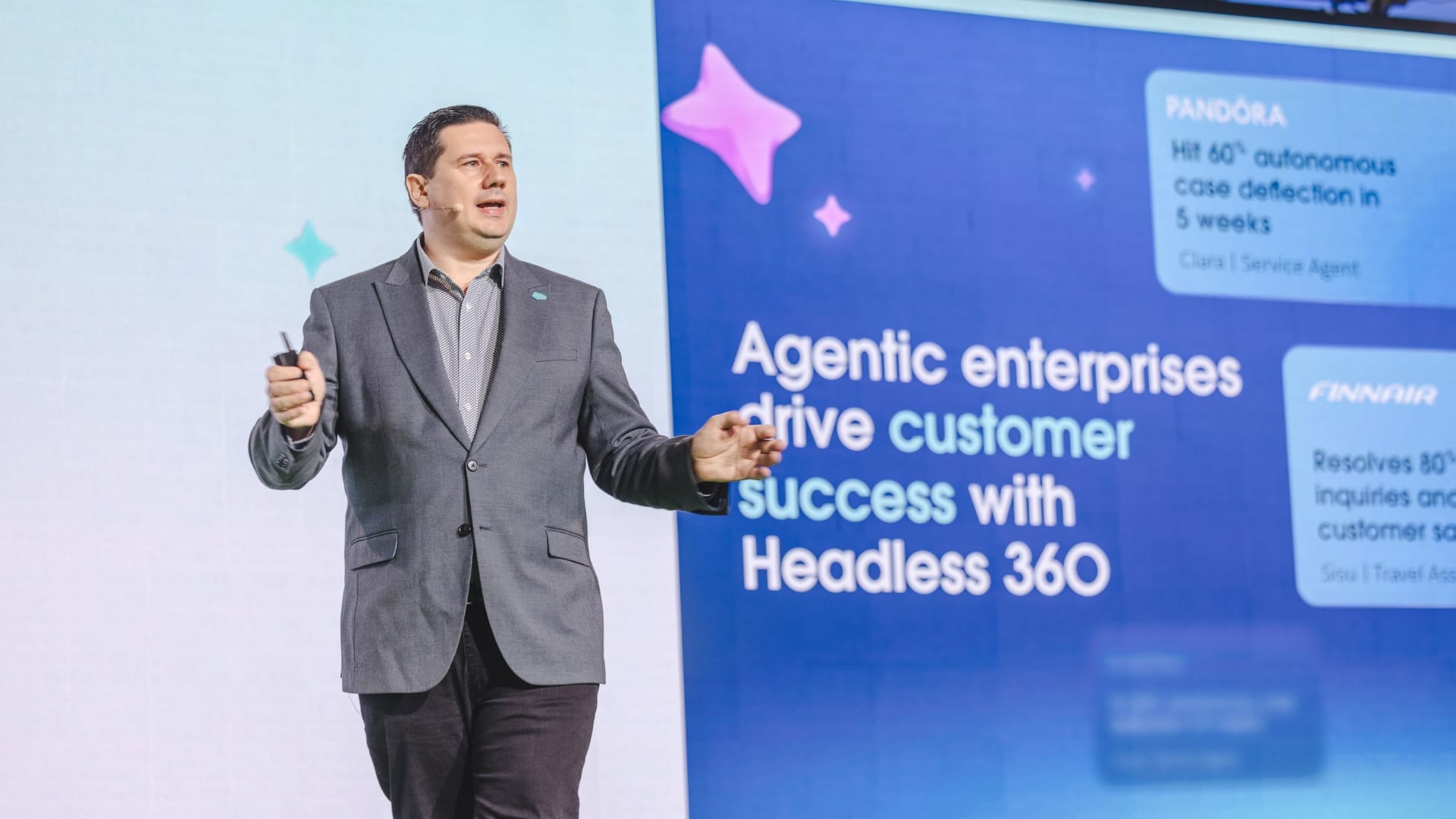
Enterprise AI agents are finding early traction in workflows where the task is defined, the data is available and the operating environment can be controlled. Salesforce’s latest Singapore update points to that more practical phase of adoption, with Agentforce 360 being used across admissions, customer support, student engagement, employee collaboration and data management.
The company named Kaplan, INSEAD, Panasonic Asia Pacific, StarHub, HEPMIL Media Group and Singapore Global Network among the organisations using its AI and data platforms. Rather than presenting a single model of AI adoption, the deployments show how agentic AI is entering organisations through specific operational bottlenecks before expanding into broader workflow and data infrastructure.
Service workflows are the clearest entry point
The most immediate use cases sit in service-heavy environments, where organisations need to manage repeated enquiries, documents and routine decisions at scale.
In education, Kaplan is using Agentforce to automate document screening and validation during admissions. The private education institution also plans to use the platform to respond in real time to enquiries from new students and prospects on its website. INSEAD is applying Agentforce in a similar service context, using an AI agent to provide 24/7 FAQ support, course recommendations and automation for routine steps in the student purchase journey, including payment plans and case updates.
The same pattern appears in consumer support. Panasonic Asia Pacific is using Agentforce with its service team to triage customer requests, recommend personalised solutions and improve support efficiency. The deployment was first made available on Panasonic’s Philippines online store in 2025 and expanded into Vietnam, Cambodia and Thailand last month.
These deployments point to a practical adoption path for AI agents. The technology is being inserted where organisations already have structured processes and high-volume interactions, making the value easier to measure than in broad, open-ended productivity use cases.
“By harnessing Agentforce, we are bridging the gap between administrative complexity and student needs. Technology is the vital foundation that allows us to scale personalised support and empower our learners to achieve their potential,” said Alex Chevrolle, Managing Director, Kaplan (Singapore).
Data access determines how far agents can move
Salesforce’s customer examples also show that AI agents depend on the systems around them. For agents to act beyond simple query handling, organisations need cleaner data, workflow access and collaboration channels that connect teams and processes.
Singapore Global Network, a division of Singapore’s Economic Development Board, is using Salesforce as a unified platform to engage a global community of about 300,000 members. Its deployment of Data 360 is intended to unify disparate data sources and support AI-integrated workflows across member engagement, funding programmes and case management.
HEPMIL Media Group shows a different version of the same requirement. The Southeast Asia-based influencer marketing and content creation agency uses Salesforce across leads and opportunity management on Sales Cloud, platform integrations through MuleSoft, collaboration on Slack and data-driven insights through Tableau. In this case, Salesforce functions less as a standalone CRM and more as part of the company’s operating layer.
StarHub’s rollout of Slack sits closer to the employee workflow side of adoption. The telco has deployed Slack across the organisation to strengthen internal communications and engagement, with Salesforce describing Slack as an engagement layer that connects AI, data and workflows into daily operations.
“At StarHub, it starts with our people and how they work together every day. Slack is helping us bring our teams closer, starting with how we engage and communicate across the organisation. It simplifies how work gets done, making it easier for our people to share information, stay aligned, and focus on delivering better outcomes for our customers,” said Quinny Lei-Flower, Vice President, Business Technology Solutions, StarHub.
Singapore anchors Salesforce’s regional AI buildout
Salesforce is tying these customer deployments to a wider Singapore and ASEAN investment plan. The company committed in 2025 to invest US$1 billion in its Singapore business through 2030 to support digital transformation and Agentforce adoption.
The next phase includes an AI Innovation Hub in Salesforce’s Singapore office, scheduled to open in June. The hub will give customers and partners a place to test, co-innovate and deploy Agentforce, with hands-on demos, Agentforce activations and AI fluency training.
Salesforce is also working with Accenture, PwC Singapore and Huron to develop Centers of Excellence for data and AI innovation in Singapore. These centres will support new application development, hands-on Agentforce training and delivery capabilities.
The regional plan extends beyond Singapore. Salesforce says it will launch more Data & AI Centers of Excellence with partners in Thailand, the Philippines and Indonesia this year. That gives the programme a broader ASEAN role as enterprises look for controlled ways to move agentic AI from experimentation into repeatable business use.
According to IDC figures cited by Salesforce, cumulative spending on AI technologies supporting digital labour, including agentic AI, will reach S$32 billion, with a cumulative economic impact of S$78.4 billion by 2030.