


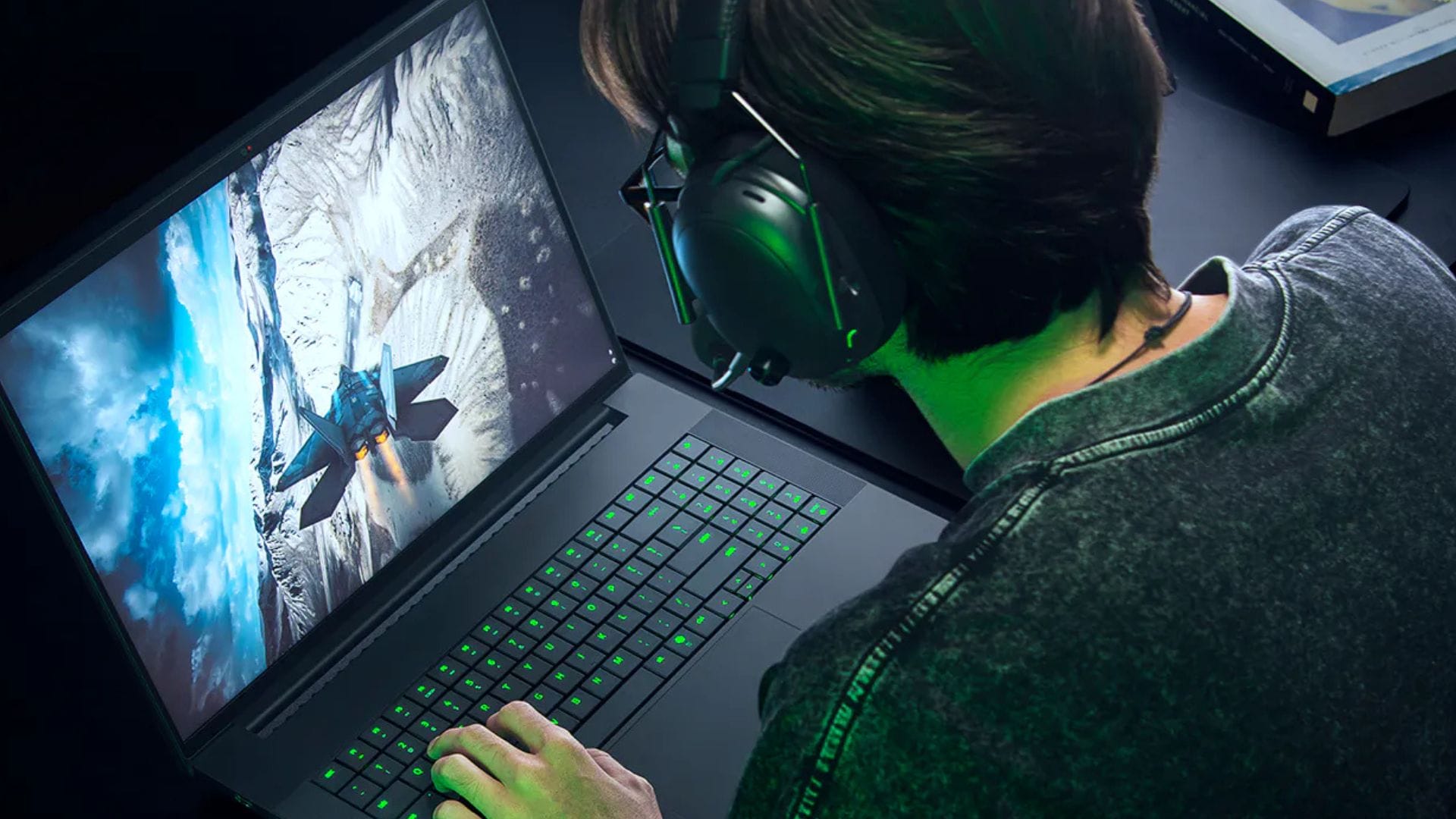
Razer has unveiled the latest version of its Blade 18 gaming laptop, introducing upgraded processors and high-end specifications aimed at gamers and AI-focused users. While the design remains largely unchanged from the previous generation, the 2026 model brings significantly more power under the hood, alongside a price tag that places it firmly in the premium category.
The updated Blade 18 now offers Intel’s Core Ultra 9 290HX Plus processor as its most powerful configuration. The chip features 24 cores and can reach boost speeds of up to 5.5GHz, making it one of the most advanced laptop processors currently available. Razer is positioning the device as a machine capable of handling demanding gaming workloads and AI-related tasks.
Pricing for the new laptop starts at US$4,000 for the base model, which includes 32GB of RAM. However, buyers seeking higher memory configurations will face steep price increases. Upgrading to 64GB of RAM adds an extra US$600, while moving from 64GB to 128GB costs a further US$1,000. The highest-end version of the Blade 18 reaches approximately US$7,000, making it one of the most expensive gaming laptops currently on the market.
High-end specifications target gamers and AI users
The graphics options for the Blade 18 remain unchanged from the 2025 version. The entry-level model includes NVIDIA’s GeForce RTX 5070 Ti graphics card, while the most expensive configuration comes with the RTX 5090. These components place the laptop among the most powerful portable gaming systems available in 2026.
Razer has also retained its dual-mode display technology. Users can switch between UHD+ at 240Hz and FHD+ at 440Hz, depending on their performance needs. According to the company, the display in the latest model is now 20 per cent brighter than before, which could improve visibility during gaming and media consumption.
The Blade 18 is clearly designed for users who prioritise performance over portability. Despite the updated internals, the laptop still weighs around 7 pounds. This makes it considerably heavier than most mainstream laptops and closer in weight to two 14-inch MacBook Pro devices combined.
Razer’s latest announcement also highlights the growing overlap between gaming hardware and AI computing. The company’s website reportedly includes separate marketing pitches aimed at gamers and AI users, reflecting broader industry trends as hardware manufacturers attempt to appeal to both audiences.
Battery life remains a concern
Although the Blade 18 offers cutting-edge performance, battery life is expected to remain one of its biggest weaknesses. The laptop still uses the same 99Wh battery as the previous model, raising concerns about how long it can run without a power source.
Last year’s Blade 18 received criticism for poor battery endurance. Engadget reviewer Devindra Hardawar described the earlier model’s battery life as “terrible” after testing showed the device lasted just two hours and 17 minutes in the PCMark 10 benchmark. While the 2026 version has not yet undergone the same testing, the unchanged battery capacity suggests that users should not expect dramatic improvements.
High-performance gaming laptops have long struggled to balance power with portability, particularly as manufacturers introduce increasingly powerful processors and graphics cards. Devices such as the Blade 18 often require large cooling systems and high power consumption, which can strain battery life.
Despite this limitation, the Blade 18 may still appeal to users seeking desktop-level performance in a portable form factor. The laptop is likely to be used primarily as a replacement for a traditional desktop computer rather than as a machine designed for extended mobile use.
Connectivity and availability
Razer has equipped the Blade 18 with a wide range of connectivity options aimed at professional and enthusiast users. The laptop features one Thunderbolt 5 port and one Thunderbolt 4 port, supporting high-speed data transfers and external displays.
Additional ports include three USB 3.2 Gen 2 Type-A connections, an HDMI 2.1 port, a 2.5Gb Ethernet port and a UHS-II SD card reader. These features are intended to support gamers, content creators and users working with large files or external hardware.
The company has confirmed that the Blade 18 (2026) is available for immediate purchase on its official website. Razer has continued its strategy of marketing the device towards both gaming enthusiasts and AI-focused professionals, reflecting the increasing demand for high-performance laptops capable of handling advanced workloads.
While the pricing may limit its appeal to mainstream consumers, the Blade 18 demonstrates how manufacturers are continuing to push the boundaries of laptop performance. With top-tier processors, powerful graphics hardware and high-refresh-rate displays, devices in this category are becoming increasingly capable of replacing traditional desktop PCs for demanding users.