

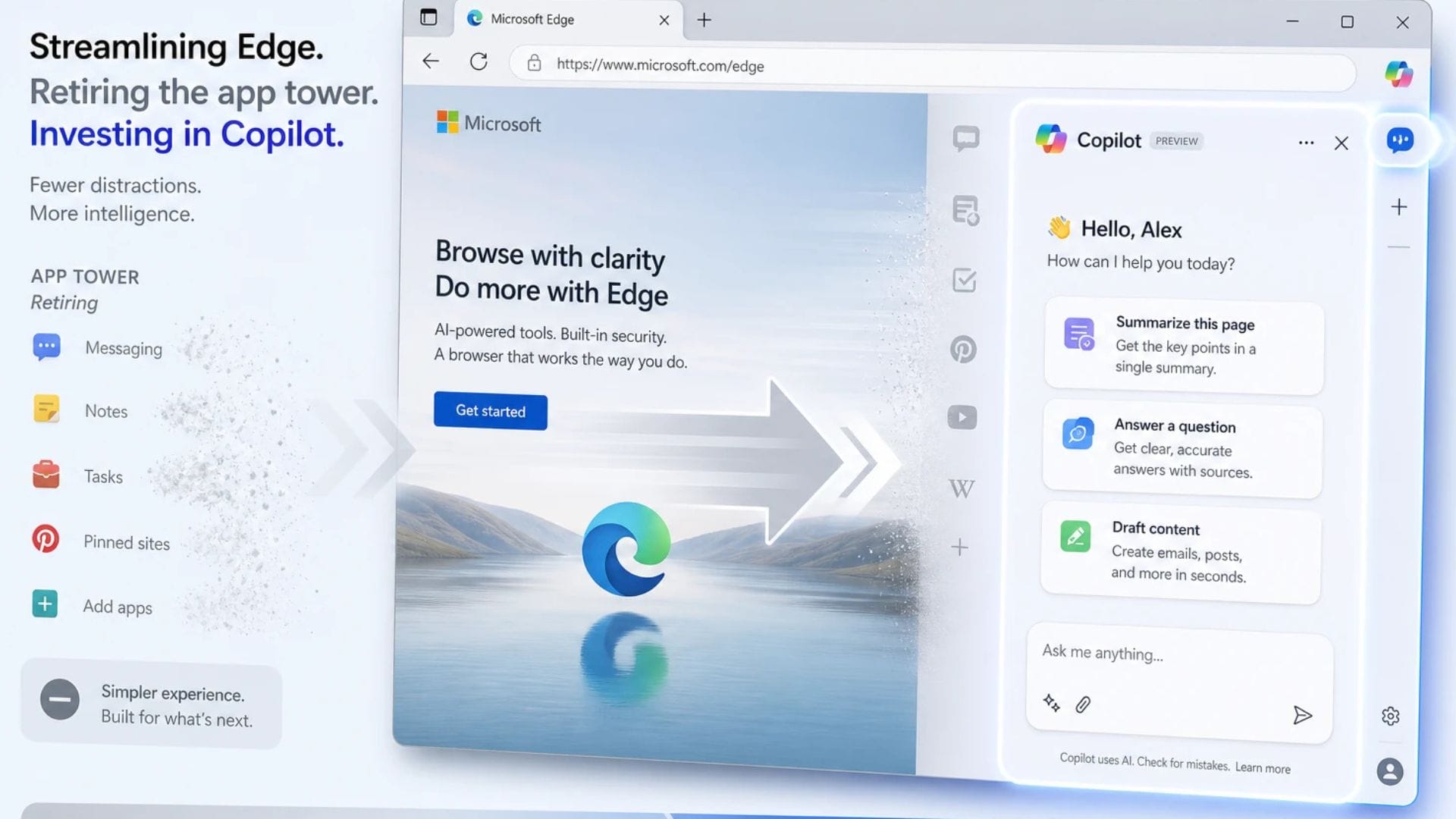
Microsoft is preparing to remove one of the more distinctive features from its Edge browser as part of a broader effort to streamline its software ecosystem. The company has confirmed that the sidebar app list in Edge will be retired, beginning with users signed in with a Microsoft account. While the move is positioned as a step towards simplifying the browsing experience, Microsoft has not yet provided a specific date for when the feature will be fully discontinued.
The change forms part of a wider initiative to reduce complexity across Windows 11 and its associated applications. Over recent updates, Microsoft has steadily refined its design approach, removing or consolidating features that it considers redundant or underused. The removal of sidebar apps reflects this ongoing effort to create a cleaner and more consistent user experience across its platforms.
What the sidebar feature offered users
The sidebar in Microsoft Edge has, until now, allowed users to pin web applications and frequently visited sites into a compact panel alongside the main browsing window. This functionality enabled quick access to services such as email, shopping platforms, search tools, and other web-based utilities without requiring users to leave their current tab.
According to Microsoft’s own support documentation, the feature was intended to help users streamline their workflow by keeping essential tools readily accessible. For some, it effectively turned the browser into a multitasking hub, reducing the need to switch between tabs or windows. This approach differentiated Edge from other Chromium-based browsers, which generally rely more heavily on traditional tab management.
However, Microsoft has now confirmed that the ability to add new apps to the sidebar has already been disabled. Existing pinned apps will be removed in a future update, with the rollout expected to happen gradually. Users who currently rely on the feature will receive notifications in the browser before its full removal, giving them time to adjust to the change.
The company has not outlined a direct replacement for the sidebar app list. While features such as Split Screen remain available, they do not replicate the same quick-access functionality that the sidebar provided. As a result, some users may need to adapt their browsing habits or seek alternative methods for managing frequently used web tools.
Copilot remains central despite user concerns
While the sidebar app list is being phased out, Microsoft has made it clear that its Copilot integration within Edge will remain unaffected. In fact, the company has indicated that it plans to continue investing in and expanding Copilot’s capabilities, reinforcing its role as a key component of the browser’s future.
This decision has drawn mixed reactions from users. Some have expressed frustration that a practical and widely used feature is being removed, while Microsoft’s AI assistant remains a focal point of development. For users who built workflows around sidebar apps, the change represents a disruption that existing alternatives may not easily resolve.
The sidebar app list had become a defining feature for a segment of Edge users, offering a level of convenience that set the browser apart. Its removal may narrow the functional gap between Edge and competing browsers, potentially affecting how users perceive its unique value.
Despite these concerns, Microsoft appears committed to its strategy of prioritising AI-driven features and a simplified interface. The company’s broader vision suggests a shift towards fewer, more integrated tools rather than a wide range of customisable options. Whether this approach will resonate with users in the long term remains to be seen.
As the rollout progresses, user feedback is likely to shape future updates. For now, the retirement of sidebar apps marks another step in Microsoft’s ongoing effort to refine its software ecosystem, even as it risks alienating some of its more dedicated users.