


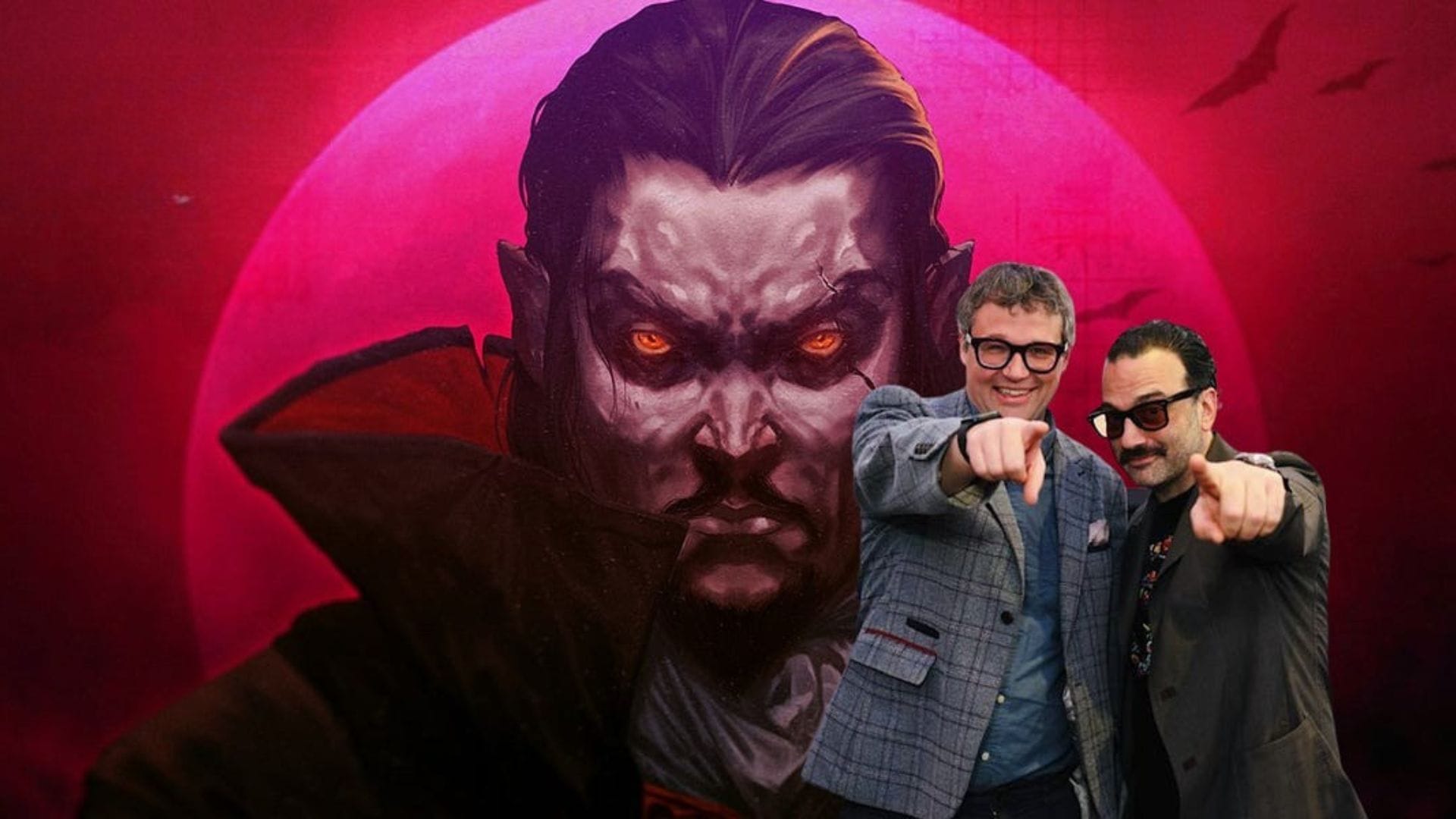
Poncle, the independent developer best known for its breakout hit Vampire Survivors, is preparing for a significant phase of growth with plans to open two additional studios and expand its portfolio of games. The move signals a shift for the company from a single-franchise focus to a broader development strategy built around multiple projects and intellectual properties.
In an interview with The Game Business, chief strategy officer Matteo Sapio confirmed that Poncle currently has more than 15 projects in active development. The expansion includes the creation of new studios in Japan and Italy, designed to support the company’s growing ambitions while maintaining the smaller team structure that has defined its work to date.
The announcement highlights a rapid evolution for a studio that, until recently, was primarily associated with one title. While Vampire Survivors remains a central pillar of the company’s success, Poncle now appears determined to transform itself into a multi-project developer with a wider creative scope.
New studios support multi-project expansion
Poncle’s decision to establish new studios in Japan and Italy reflects a deliberate effort to distribute development across multiple regions while retaining flexibility in production. According to Sapio, these new facilities will not resemble large-scale AAA operations, but will instead consist of compact teams focused on efficiency and creativity.
He explained that the company intends to rely on “little teams of people” to handle individual projects. This structure, he said, allows the organisation to remain “agile and flexible” as it scales up. Rather than pursuing large acquisitions or dramatically increasing staff numbers, Poncle appears to favour gradual expansion supported by smaller, specialised groups.
The company’s development pipeline currently spans three main game categories. The first includes spin-offs based on the Vampire Survivors universe. One recent example is Vampire Crawlers, a deck-building title that extends the original game’s design philosophy into a different gameplay style.
The second category involves entirely new intellectual properties. Sapio indicated that at least two titles set in new fictional worlds are currently in development. These projects suggest that Poncle is seeking to diversify its creative output rather than relying solely on its established brand’s popularity.
The third category focuses on roguelite games that adopt gameplay mechanics similar to Vampire Survivors while incorporating other established intellectual properties. One such project, Warhammer Survivors, is set within the Warhammer 40K universe and is expected to launch on Steam later this year.
Genre popularity fuels continued demand
The growing popularity of the top-down roguelite genre supports Poncle’s strategy. These games typically feature simple controls, rapid action, and large numbers of enemies on-screen, a format that has proven highly appealing to a wide range of players.
The continued success of Vampire Survivors has played a major role in shaping this trend. The original game has now surpassed 27 million players worldwide, demonstrating strong demand for accessible gameplay and replayable mechanics. Its influence has also encouraged other developers to explore similar formats.
Several recent releases from different studios have contributed to the genre’s rise. These titles have demonstrated sufficient player interest to support multiple games using comparable systems. As a result, Poncle’s decision to expand its portfolio in this space appears aligned with broader market demand.
To support its multi-project strategy, Poncle has developed its own internal game engine. This technology is designed to convert pre-existing intellectual properties into games that follow the gameplay style popularised by Vampire Survivors. By streamlining development in this way, the company aims to reduce production time while maintaining consistency across projects.
This technical investment may also allow the studio to collaborate with partners that own established brands. By adapting familiar intellectual properties into the roguelite format, Poncle could attract both existing fans and new audiences, thereby strengthening its market position.
Publishing pause reflects lessons learned
Alongside its development expansion, Poncle has temporarily paused its third-party publishing efforts. The company previously released a small number of externally developed games last year, but has since decided to reassess its approach to publishing partnerships.
Sapio described the experience as instructive but challenging. “It was a learning experience,” he said. “But we found that we weren’t able to give the right support.” His comments suggest that the company intends to refine its internal capabilities before returning to third-party publishing.
The decision to pause publishing activity may also reflect the risks associated with rapid growth in the games industry. Some large companies have faced difficulties after expanding too quickly, particularly when managing numerous studios and projects at once. By contrast, Poncle’s leadership appears to favour measured expansion that avoids overstretching resources.
Despite these challenges, the company’s current trajectory signals confidence in its long-term strategy. By investing in new studios, diversifying its intellectual properties and refining its technology, Poncle aims to establish itself as a sustainable independent developer with a steady pipeline of releases.
Industry observers note that growth at this scale carries inherent uncertainty, particularly for a studio transitioning from a single major success to multiple ongoing projects. However, the company’s emphasis on smaller teams and flexible development structures may help it adapt to changing market conditions.
If Poncle can maintain consistent quality across its expanding catalogue, its transformation from a single-hit developer into a broader creative studio could mark one of the more notable evolutions within the independent games sector.