


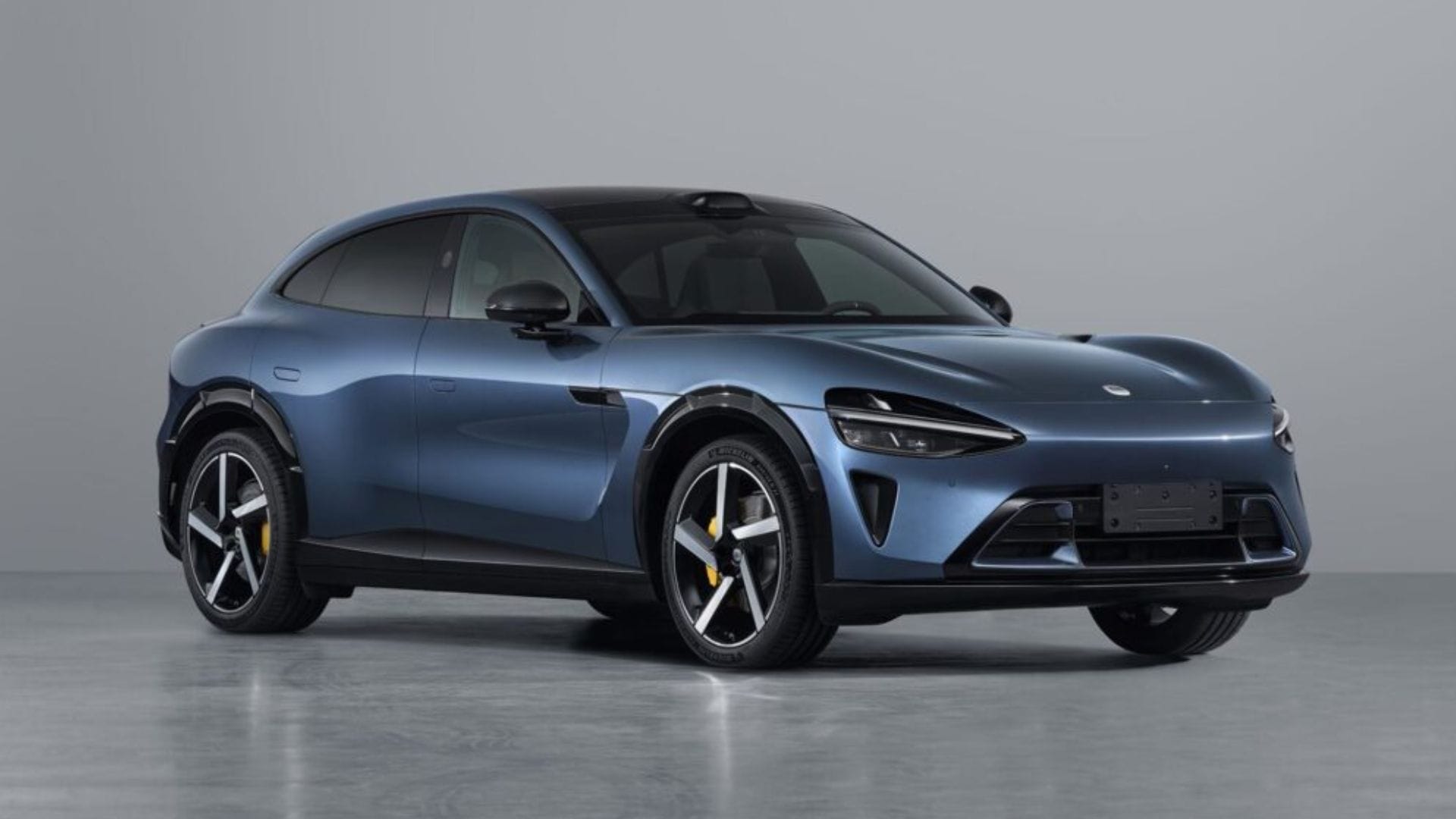
Xiaomi has officially revealed its new electric SUV, the YU7, in China — and it’s already making waves. If you’ve been keeping an eye on the electric vehicle (EV) race, you’ll know Tesla has been dominating with the Model Y. But Xiaomi’s latest launch might give Elon Musk a reason to worry.
The YU7 arrives with impressive specs and bold ambitions. Designed to rival the Tesla Model Y directly, it is shaping up to be a strong contender in the world’s most competitive EV market. You can reserve the vehicle starting in July, and more details—including the price—are expected as that date approaches.
What makes the YU7 stand out?
You’re getting a lot of performance for an electric SUV. Depending on the version, the YU7 can reach up to 518 miles (835 km) of range, more than what Tesla’s Model Y offers. That’s not all — the SUV can also go from 0 to 62 mph in just 3.23 seconds. It’s fast, stylish, and very efficient.
You’re not alone if you’ve heard comparisons to Apple’s rumoured car project. Many are calling the YU7 China’s answer to the Apple car — a concept that never quite took off. But Xiaomi seems to be turning that dream into a real product.
The YU7 follows the SU7, Xiaomi’s first EV, which began deliveries in March 2024. That model was a major success. By April 2025, Xiaomi had sold more than 200,000 SU7s, beating out global EV sales figures for Ford and General Motors. The YU7 is expected to build on that success, especially as it aims to squarely topple the Model Y from its top spot in China.
A direct shot at Tesla’s Model Y
Xiaomi is not being subtle about its goals. The company’s founder, chairman, and CEO, Lei Jun, openly compared the YU7 to the Tesla Model Y during the launch. He even shared a side-by-side size comparison between the two SUVs.
Xiaomi wants to challenge Tesla head-on. And the YU7 may have what it takes. In addition to its greater range, the SUV features a sleek, sporty design that appeals to buyers who want performance and style in one package.
Lei Jun also made it clear that driving range was a top priority for EV shoppers, which is why the YU7 was developed to lead the pack in that area. With a battery size under 100 kWh, that achievement is even more impressive.
Xiaomi claims the YU7 is the “longest-range pure electric SUV with a sub-100 kWh battery” in its class. It’s described as a top performer in the mid-to-large electric SUV segment.
Advanced tech and lightning-fast charging
You’ll also find some impressive tech under the bonnet. The YU7 includes Nvidia’s Drive AGX Thor in-vehicle computing platform, which helps power advanced driving features. It also has active air suspension for a smoother ride and uses an 800-volt architecture with a peak voltage of 897V.
What does that mean for you? Super-fast charging. You can charge the YU7 from 10% to 80% in 12 minutes. Need more range in a hurry? You can add 385 miles (620 km) of charge in only 15 minutes.
The big question now is how much it will cost. Xiaomi hasn’t released the YU7’s pricing yet, but it’s expected to do so closer to July 2025. That number will determine whether the YU7 can truly steal buyers from Tesla.
So, if you’re shopping for an electric SUV in China, the YU7 might be the model that changes everything.