


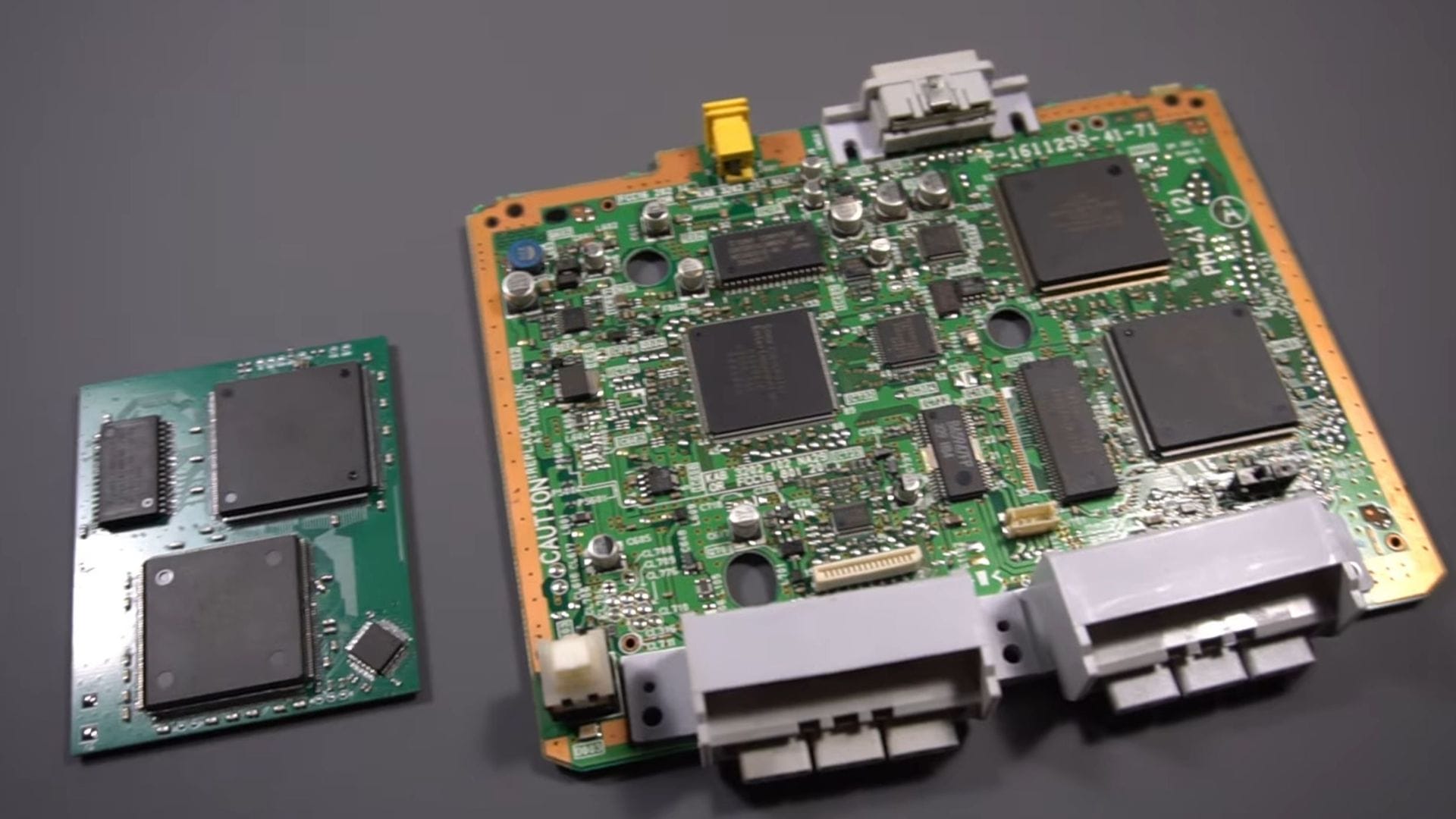
A hardware enthusiast has developed a custom PlayStation circuit board that combines components from multiple console generations while introducing modern functionality. The project, created by YouTuber Secret Hobbyist, highlights the growing trend of retro console modification, where ageing systems are rebuilt or enhanced using both original and contemporary parts.
Retro modding has gained popularity in recent years, with hobbyists restoring older consoles such as the Game Boy Advance using upgraded displays, rechargeable batteries and USB-C charging. However, most of these modifications still depend on the original motherboard and core components remaining intact. In contrast, this latest PlayStation project goes further by reimagining the console’s internal structure.
The creator has spent several months designing and prototyping what they describe as a hybrid PlayStation printed circuit board (PCB). Rather than relying on a single revision of Sony’s original hardware, the design incorporates elements from multiple motherboard versions released during the console’s lifespan.
Combining parts from different PlayStation generations
The hybrid PCB draws components from two specific PlayStation motherboard revisions: the PM-41 v2, used in the smaller PSOne, and the PU18, found in earlier “phat” PlayStation models. This approach reflects the evolution of Sony’s hardware between the original PlayStation launch in 1994 and the release of the PSOne in 2000, during which the company introduced numerous revisions to improve efficiency and reduce production costs.
One notable inclusion from older PlayStation models is a digital-to-analogue audio converter manufactured by Asahi Kasei. This component has developed a strong reputation among audio enthusiasts, particularly in early console versions such as the SCPH-1000 and SCPH-3000. These models are often valued not only for gaming but also for their use as CD players, partly because they include RCA audio outputs that were later removed in later revisions.
The PU18 motherboard supports the X Station, a popular modification that replaces the PlayStation’s optical drive. This allows games to be loaded directly from a microSD card, eliminating the need for physical discs and improving reliability. By integrating this feature into the hybrid design, the project aligns with a broader shift towards solid-state storage in retro gaming modifications.
From the PSOne, the builder selected the console’s central processing unit and graphics processing unit. These components are known for their improved power efficiency compared with earlier PlayStation hardware. Their inclusion helps reduce overall energy consumption while maintaining performance consistent with the original system.
Modern output and future potential
In addition to combining legacy components, the project introduces modern capabilities by using a field-programmable gate array (FPGA) chip sourced from a third-party modification kit. This addition enables the hybrid PlayStation to output video via HDMI, making it compatible with contemporary displays without the need for external converters.
The resulting PCB is smaller than the PSOne’s original PM-41 v2 board and consumes less than two watts of power. This level of efficiency opens the door to further innovation, including the development of a portable version of the console. While no enclosure has yet been designed, the low power requirements suggest that a handheld form factor could be feasible in future iterations.
The project has attracted attention within the retro gaming community, where enthusiasts have expressed interest in seeing the design completed and potentially made more widely available. The detailed build process, including intricate soldering, has also been highlighted as an example of the technical skill required for advanced console modification.
Although still in development, the hybrid PlayStation demonstrates how legacy hardware can be re-engineered to meet modern expectations while preserving the original gaming experience. By blending components from different eras and adding contemporary features such as HDMI output and solid-state storage, the project offers a glimpse into the future of retro gaming innovation.