


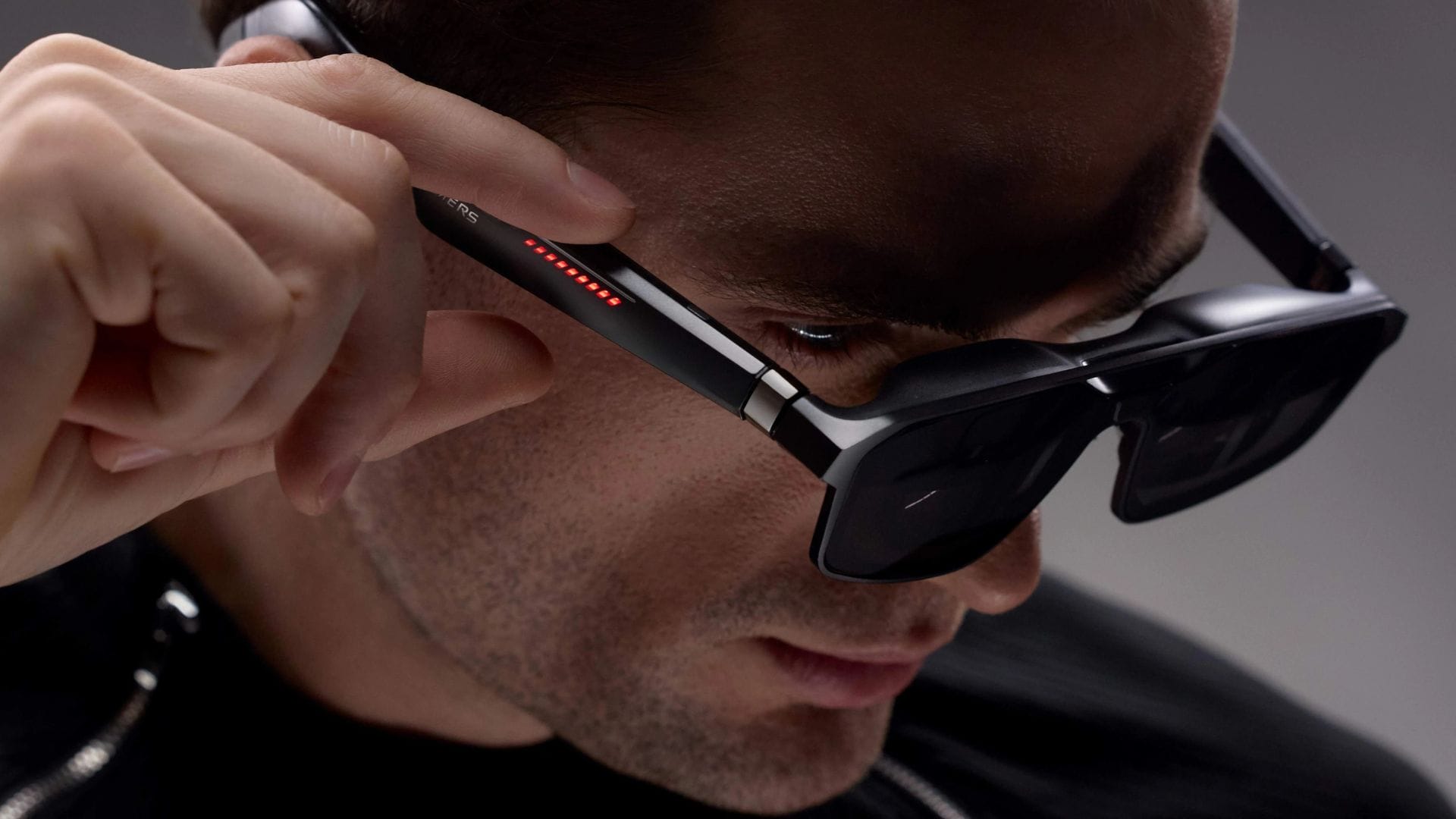
ASUS-owned gaming brand ROG has opened pre-orders for its new Xreal R1 augmented reality gaming glasses, following their debut at CES earlier this year. The device is priced at US$849 and is currently available for pre-order through Best Buy, with wider availability expected from 17 May via the company’s official website.
The launch places the ROG Xreal R1 above Xreal’s existing One Pro glasses, which retail for US$649. The higher price reflects several upgraded features aimed at gamers, including a 240Hz refresh rate and a bundled dock that supports multiple gaming platforms and external devices.
Gaming-focused upgrades target high-performance users
The ROG Xreal R1 builds on the foundation established by Xreal’s earlier wearable display products. The glasses feature a 57-degree field of view and can project what is described as a virtual 171-inch screen at a distance of 4 metres. Like previous models, the display resolution remains at 1080p.
Although some users may have hoped for a higher-resolution display at this price point, the device continues to rely on compact micro-OLED panels, which may limit the availability of 1440p or 4K options in this form factor. The updated refresh rate is expected to improve performance in fast-paced games, particularly competitive shooters, where smoother motion can make gameplay feel more responsive.
Beyond gaming, the glasses are also designed for media consumption and general computing tasks. Users can connect the device to a PC to extend their workspace or use it to watch films and streaming content while travelling. The lightweight design is positioned as an alternative to bulkier virtual reality headsets, offering a more portable experience for users on the move.
Dock expands compatibility with consoles and PCs
One of the key additions to the ROG version of the glasses is the bundled docking accessory. The dock is intended to simplify connections between the glasses and a range of gaming hardware, including consoles, PCs and handheld systems. Earlier Xreal products relied more heavily on direct USB-C connections, which could limit compatibility with certain devices.
The new dock is expected to improve support for hardware that can be difficult to connect to through standard USB-C setups. This includes devices such as the Nintendo Switch 2, which may require more specialised connectivity solutions to function smoothly with external display accessories.
While the dock increases flexibility, it may also reduce portability. Reports suggest the accessory is noticeably larger than expected, making the overall setup less travel-friendly compared with previous Xreal products that focused heavily on compact design and convenience.
The glasses themselves can still be connected directly to compatible hardware through USB-C, allowing users to bypass the dock when portability is more important than expanded connectivity. This gives users the option to tailor the setup depending on whether they are gaming at home or travelling.
Interest grows in wearable displays for travel and entertainment
Wearable display technology has continued to attract attention from both gaming and productivity users, particularly among those seeking portable alternatives to traditional monitors and VR headsets. Products such as the Xreal One Pro have gained interest for their ability to create large virtual displays in compact form.
Early impressions of Xreal’s previous models highlighted their usefulness during travel. Users have reported that the glasses worked well for expanding laptop screens, watching films and playing games in confined environments such as planes and hotel rooms. Their lighter weight compared with VR headsets has also been viewed as a practical advantage for extended use.
Prescription lens support has further broadened accessibility for users who require corrective eyewear. Despite the additional lenses, display clarity has remained sharp, making wearable displays more viable for everyday entertainment and work tasks.
The release of the ROG Xreal R1 suggests ASUS and Xreal are aiming to strengthen their position in the growing market for gaming-focused AR hardware. By combining high refresh rates with broader device compatibility, the companies appear to be targeting users who want immersive gaming experiences without the size and complexity of traditional VR systems.