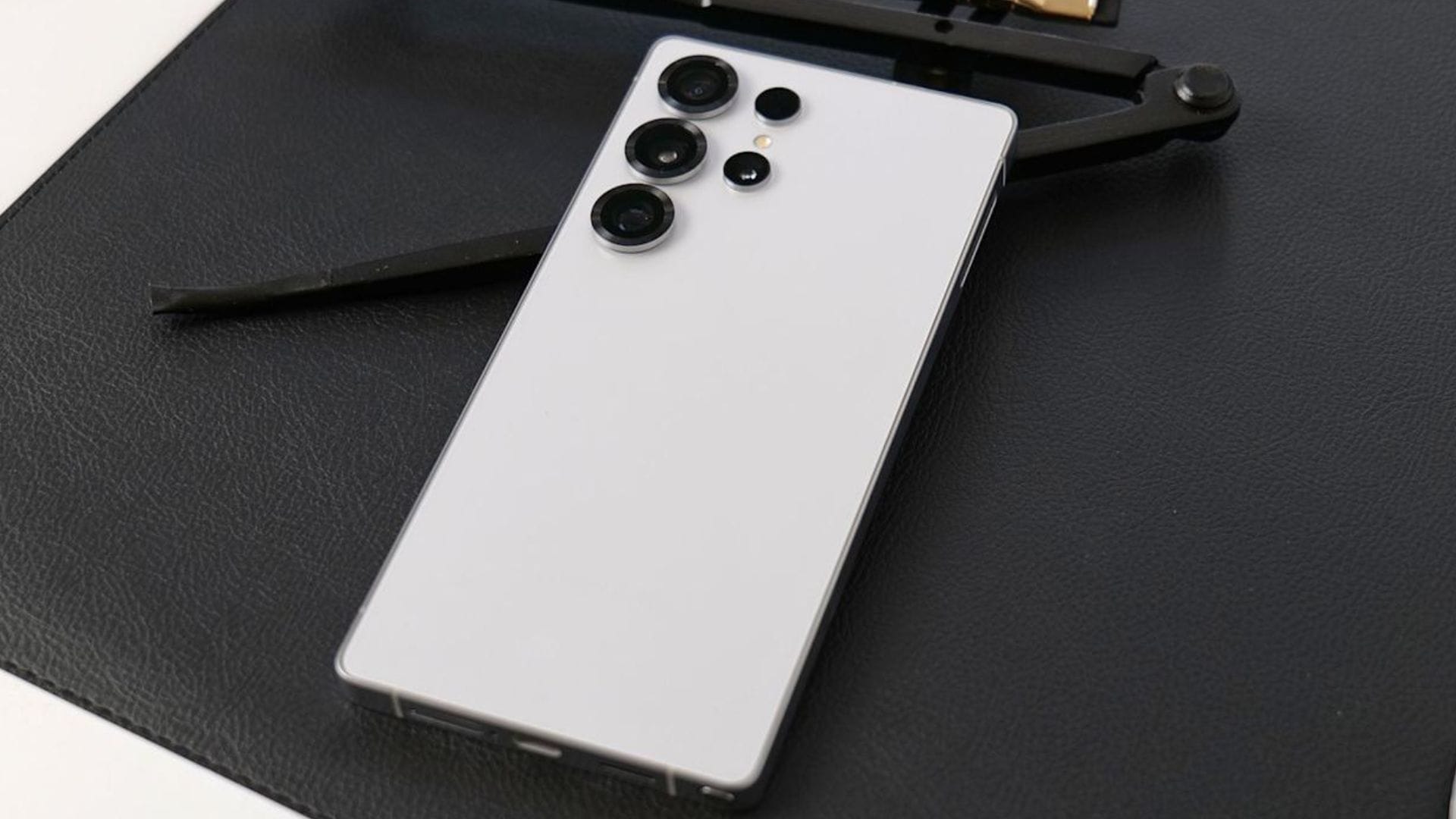
A viral TikTok video has drawn attention to the strength of smartphone flashlights after a Samsung Galaxy device was shown melting a plastic bag. The clip, posted by user @neev.akavak, features a Samsung Galaxy S25 FE whose LED flash appeared powerful enough to burn a hole through a black plastic bag when held in close contact.
@neev.akavak Me and Tommy saw a video of Samsung flash melting garbage bag so we had to try it out ourselves 😂😂 #samsungs25fe #iphone16promax #fyp ♬ original sound – RWEeditz
The video quickly sparked debate online, particularly because many recent Samsung Galaxy models are believed to use similar flash hardware across generations, including the Galaxy S24, Galaxy S25, and potentially the upcoming Galaxy S26 series. While the demonstration has not been verified as a typical everyday outcome, it has prompted concern about how strong modern smartphone flash units have become.
Reactions on social media ranged from humour to alarm. One user commented, “This is why museums don’t allow flash, folks,” while another wrote, “Sometimes I accidentally put my phone in my pocket with the flash on, and it feels like it’s burning a hole through me.” The clip has since circulated widely, fuelling debate over whether such devices pose a real safety risk.
Despite the video’s dramatic nature, experts and observers have emphasised that the effect is not unexpected when intense LED light is placed in direct contact with thin synthetic materials for an extended period.
How smartphone flashlights can generate heat
The apparent melting effect seen in the viral video is linked to the basic physics of light and heat. Modern smartphone flashlights use high-intensity LEDs designed to produce bright illumination in a compact space. When this light is concentrated into a small area and held very close to a surface, the beam’s energy can be absorbed by the material, converting it into heat.
This is particularly relevant for thin plastics and synthetic fabrics, which can be more susceptible to heat damage when exposed to concentrated light sources. While smartphones are not designed to generate high temperatures in normal use, prolonged contact between a bright LED flash and an object can, in theory, produce enough localised heat to leave marks or cause deformation.
Samsung itself acknowledges this possibility in its built-in Flashlight tool. When users increase brightness, a warning appears stating: “The camera light may cause low temperature burns when in prolonged contact with the skin. Avoid leaving the Flashlight turned on for an extended period.” The message is intended to encourage users to avoid direct contact between the light source and skin or other materials.
Even so, the company does not classify the feature as dangerous under normal conditions. The risk arises primarily from misuse or accidental prolonged activation, rather than routine everyday use. As such, most safety concerns are linked to human behaviour rather than device malfunction.
Experts warn of accidental misuse and wider industry concerns
Industry experts have highlighted that the main issue with powerful smartphone flashlights is not deliberate use, but accidental activation or prolonged exposure in confined spaces. Lee Elliott, Chief Product Officer at the phone recycling website Compare and Recycle, noted that while warnings exist, users can easily forget to turn a torch off.
“Although devices do show a warning when the torch is on the highest brightness, we all know how easy it is to forget to turn things on our devices off – or toggle them on accidentally,” he said. Elliott added that problems could arise if a flashlight is left on inside enclosed environments such as pockets or bags, where synthetic materials are commonly present.
He further explained that extended exposure in such conditions could, in rare cases, lead to damage or melting, stating that “if left for a prolonged period of time, this could potentially become a fire risk.” He advised users to ensure flashlights are turned off when not in use and to avoid covering the light source for long periods.
Concerns over smartphone flash intensity are not limited to Samsung devices. Reports have also surfaced involving Google Pixel 10 and Pixel 10 Pro XL users, who claimed their flashlight modules showed signs of burning or melting after extended use. Meanwhile, comparisons shared online suggest that some Samsung models, such as the Galaxy S25 Ultra, may have noticeably stronger flash output than certain Apple devices, including the iPhone 17 Pro Max, though usage conditions vary widely.
Ultimately, experts agree that while smartphone flashlights are safe under normal use, caution is advisable. Users are encouraged to avoid prolonged direct contact between the flash and any surface, particularly in confined spaces, and to ensure devices are not left with the torch activated unintentionally.