


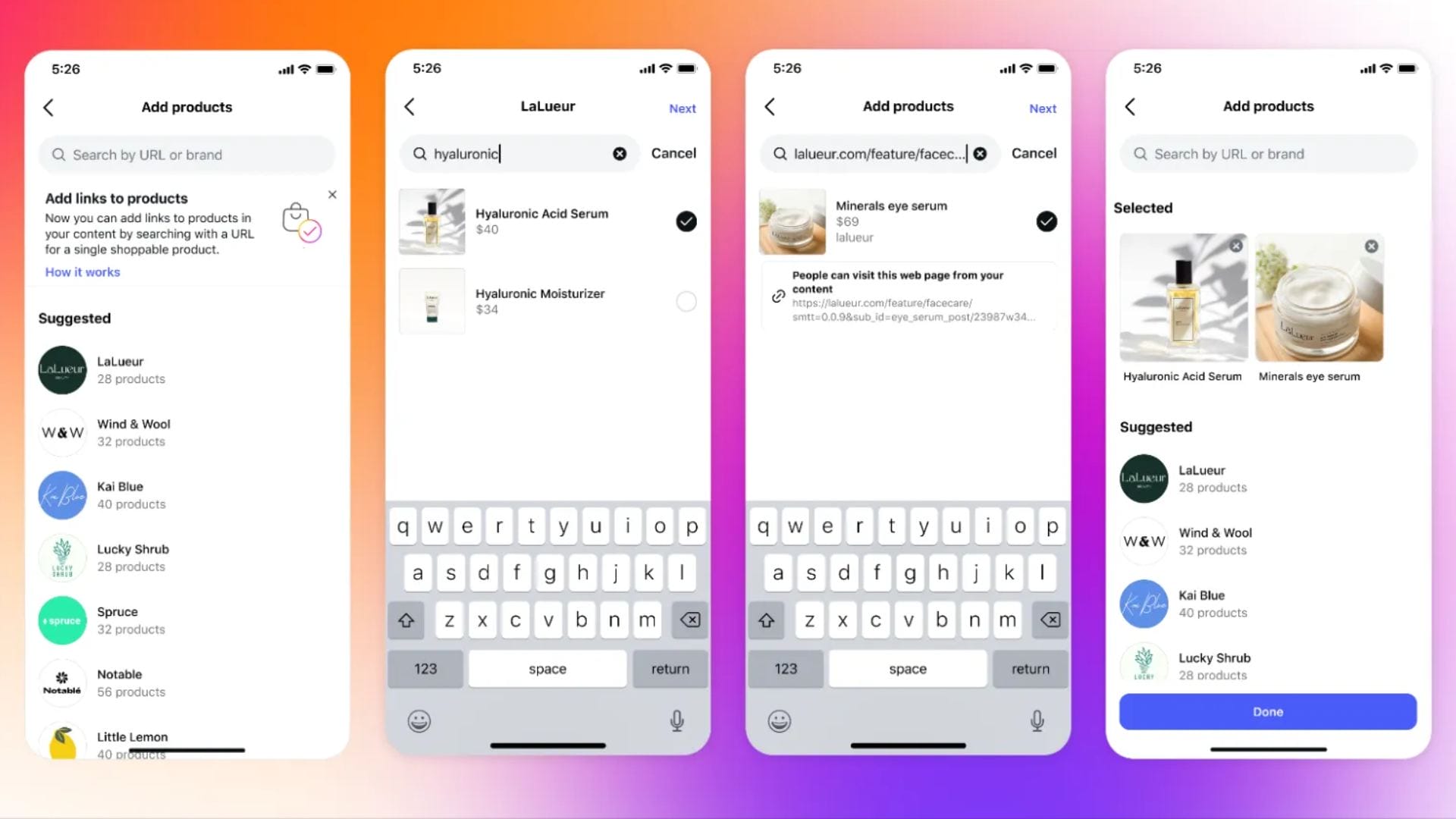
Creators on Meta’s social platforms are set to gain new tools to promote products, as the company introduces clickable shopping links within Reels on Facebook and Instagram. The move is expected to simplify how influencers and content creators direct audiences to items they recommend, while strengthening the company’s position in the growing social commerce market.
New tools for creators to monetise content
The latest update allows eligible creators to attach multiple product links directly to their short-form videos. According to Meta, creators will be able to include links to up to 30 individual products in a single Reel, offering a more streamlined way to showcase and sell recommended items.
Previously, creators faced restrictions when directing followers to external websites. Many relied on third-party “link in bio” services to manage and share multiple product links, often adding extra steps for users. By embedding links directly within Reels, Meta is reducing friction between content discovery and purchasing decisions.
The feature will be rolled out across both Facebook and Instagram. However, there are some differences between the platforms. On Facebook, creators can tag products from selected marketplace partners, such as Amazon, while Instagram offers broader flexibility for linking to a wider range of products.
Meta stated that the update is designed to support creators who depend on affiliate marketing and brand partnerships as key sources of income. These arrangements, in which creators earn a commission on sales generated through their recommendations, have become increasingly important in the creator economy.
Competition with short-form video platforms intensifies
The introduction of shopping links in Reels brings Meta’s platforms closer in line with competitors such as TikTok and YouTube, both of which have offered integrated affiliate shopping features within their short-form video formats for some time.
Short-form video has become a dominant format for online engagement, and platforms are racing to enhance monetisation options for creators. By expanding commerce capabilities, Meta is aiming to retain creators who might otherwise shift their activity to rival platforms offering more advanced earning tools.
Industry observers suggest that the update could be particularly beneficial for lifestyle creators, including those focused on fashion, beauty, fitness, and home products. These creators often rely on frequent purchases by followers, and easier access to product links may lead to higher conversion rates.
At the same time, some concerns that increased commercial content could affect user experience. If creators heavily promote products within their videos, audiences may find feeds becoming overly saturated with advertising-style content. Balancing monetisation with authenticity is likely to remain a challenge for both creators and the platform.
Data opportunities and future monetisation potential
Beyond supporting creators, the new feature is expected to provide Meta with valuable insights into consumer behaviour. By tracking which products users engage with and purchase through Reels, the company can gather detailed data to enhance its advertising strategies.
A Meta spokesperson confirmed that the company is not currently taking a share of revenue generated through these affiliate links. However, the data collected from user interactions could play a significant role in strengthening Meta’s broader advertising business.
The ability to analyse purchasing patterns may allow the company to refine ad targeting and improve the effectiveness of campaigns across its platforms. This could ultimately benefit advertisers seeking more precise ways to reach potential customers.
While Meta has not indicated whether it plans to introduce fees or commissions, analysts suggest that monetisation options could evolve as the feature matures. For now, the focus appears to be on encouraging adoption among creators and increasing engagement with shopping content.
The rollout reflects a broader trend in social media, where platforms are integrating commerce directly into content experiences. As competition intensifies, features that blend entertainment with shopping are likely to become increasingly central to how platforms attract both users and creators.